Sealing Up The Edges of the Forest
Planting a forest is a fairly complicated process, but once you understand the stages, it's not too daunting.
Firstly, you can't just plant everything that you want in the forest all at once. You have to start off with a small range of trees and shrubs that can handle lots of sun, dry soil in summer, and wind. Especially in windy Wellington. These "pioneer species" can range from kohuhu, tarata, ngaio and akiraho through to totara, rata and rewarewa.
Once these trees get to 2+ metres in height, you need to start planting a wider range of species - things that need a bit of shelter. But also things that will eventually fill in the spaces below the canopy and above it. If you don't do this, the forest doesn't develop and can start to decline, especially if weed species become established.
It's especially important to do this on the edges of the future forest. As the canopy gets taller, the wind can get in through the edges. During severe storms as what we had this autumn, this can cause a lot of damage - breaking branches, uprooting trees and blasting leaves off. So everywhere we have a forest edge, we plant it densely with smaller trees and shrubs to keep the wind out. Key species here include wharangi, ramarama, karamu, matipo, tauhinu and korimiko.
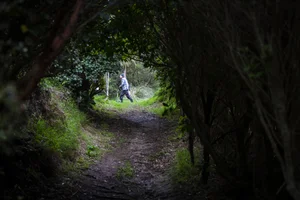
Our track sides are the most common forest edge at Manawa Karioi, a community-led ecological restoration project in Wellington. While the canopy will eventually close over the track, this can take about two decades. Until then it's vulnerable to storms and weed infestations.
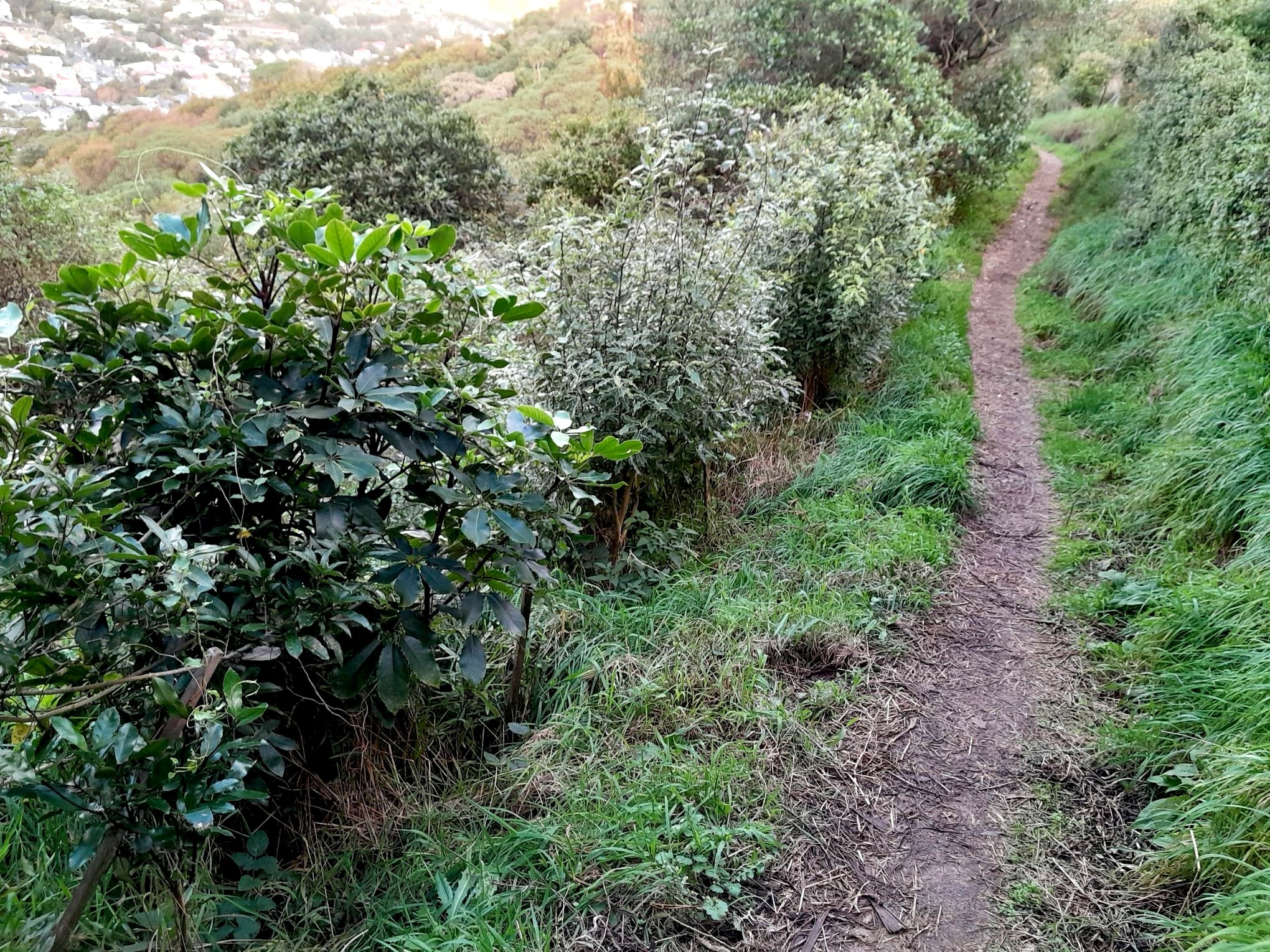
We've almost completed this planting task along Te Ahi Kaa, the 2 kilometer loop track, and have spent the last few years focusing on Moemoea track. The plantings we did on the southern end of Moemoea about 5 years ago have now grown into a dense hedge of about 20 different species. This year we will focus on the mid section of Moemoea, around where the track intersects with Te Uma I Mokotia. There are several advantages to planting a wide range range of species on forest edges. An obvious one is that if one or more species don't handle the conditions (salt-laden wind, low soil fertility etc) then you don't get canopy collapse if too many plants die off. If there is die-off, then the more suitable species will "fill the gaps".
Another reason is plant disease and pests. Putting lots of one or two species together makes it easier for pests and diseases to become established. This does occur in nature - a disease decimated a huge amount of the wharariki (mountain flax) growing on the rocky slopes on the south coast of Pōneke in the 2010s. This left large bare patches, which can potentially fill up with weed species. But fortunately there are a lot of mingimingi and hebe species in the area which will fill the empty spaces.
We only planted small patches of wharariki, and none were affected.
Lastly, make sure you plant in the right locations. Tauhinu has proved to be a valuable species on the driest upper slopes and lookout points at Manawa Karioi, where it is hard to establish much else. It's one of the most common species that are naturally establishing on the upper slopes of former farmland along the Skyline Walkway west of the Pōneke CBD. But it needs full sun, so if planted on the south side of established trees, it will quickly die.
We will also be working along the upper half of Koiwi Tohora. Like Moemoea, it's relatively sheltered from the southerly storms, but cops the northerly winds year-round.
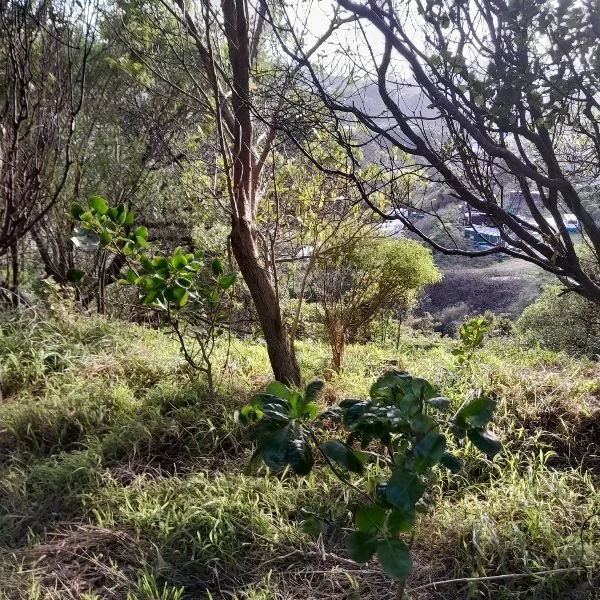
A view of the intersection of Te Ahi Kaa and Koiwi Tohora. The taller trees are a mix of ngaio, tarata and kohuhu. Some underplanting has been done in recent years, but not enough. Everything risks wind damage if more underplanting isn't done.
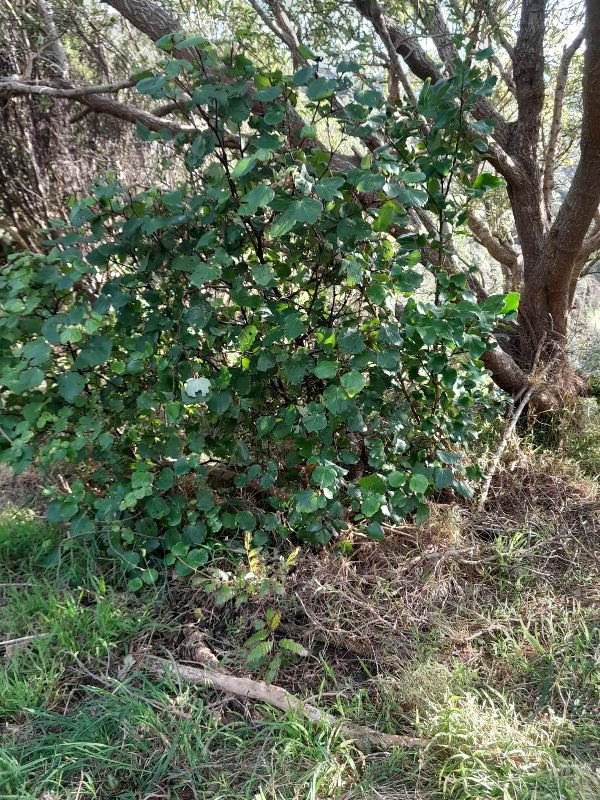
Another view of the same area. There are several kawakawa that were planted on the south side of existing trees. They have thrived as they are protected from direct sun and wind.
Written by Ross Gardiner.
At Manawa Karioi, our goal is to restore a thriving native forest ecosystem—one that supports biodiversity, protects against erosion, and revives the cultural and ecological heritage of this whenua. The planning and planting is carried out by committee members and a dedicated group of volunteers who work together to shape a resilient, self-sustaining forest for future generations.
If you’d like to support the restoration of native forest at Manawa Karioi, there are plenty of ways to get involved. We’re always looking for volunteers to help with planting, weeding, and track maintenance—no experience needed.
You can also support us by spreading the word or donating to our project via Givealittle: givealittle.co.nz/org/manawakarioiproject. Every bit of support helps this forest grow stronger for future generations.
Glossary of Native Plant Species
Akiraho (Olearia paniculata) – Also known as golden akeake, a hardy shrub with wavy, yellow-green leaves, often used in shelter planting.
Karamū (Coprosma robusta) – A fast-growing shrub with glossy leaves and orange-red berries, important for birds; also known as shiny coprosma.
Kōhūhū (Pittosporum tenuifolium) – Known as black matipo, this small tree has dark foliage and thrives in dry, windy conditions.
Koromiko / Korimiko (Hebe stricta and related species) – A shrub with spiked white to pale purple flowers; commonly called native hebe.
Matipo / Māpou (Myrsine australis) – A small tree with reddish stems and leathery leaves; commonly referred to as matipo.
Ngaio (Myoporum laetum) – A fast-growing coastal tree, sometimes called the mousehole tree, with distinctive notched leaves.
Ramarama (Lophomyrtus bullata) – A small tree with blistered, dark green to purple leaves, valued for its dense form.
Rātā (Metrosideros spp.) – Canopy trees known for their brilliant red flowers; includes northern and southern rātā.
Rewarewa (Knightia excelsa) – Also known as the New Zealand honeysuckle, this tall tree has striking red flowers and toothed leaves.
Tarata (Pittosporum eugenioides) – Known as lemonwood, a fragrant tree with lime-coloured leaves and wavy edges.
Tauhinu (Ozothamnus leptophyllus) – A silver-grey shrub, also called cottonwood, that tolerates wind and dry conditions well.
Tōtara (Podocarpus totara) – A slow-growing but long-lived tree with needle-like leaves and valued timber; iconic in Aotearoa’s native forests.
Wharangi (Melicope ternata) – A shiny-leaved coastal shrub, sometimes referred to as three-leaved melicope, though often known simply by its Māori name.