New Track Names and their Descriptions
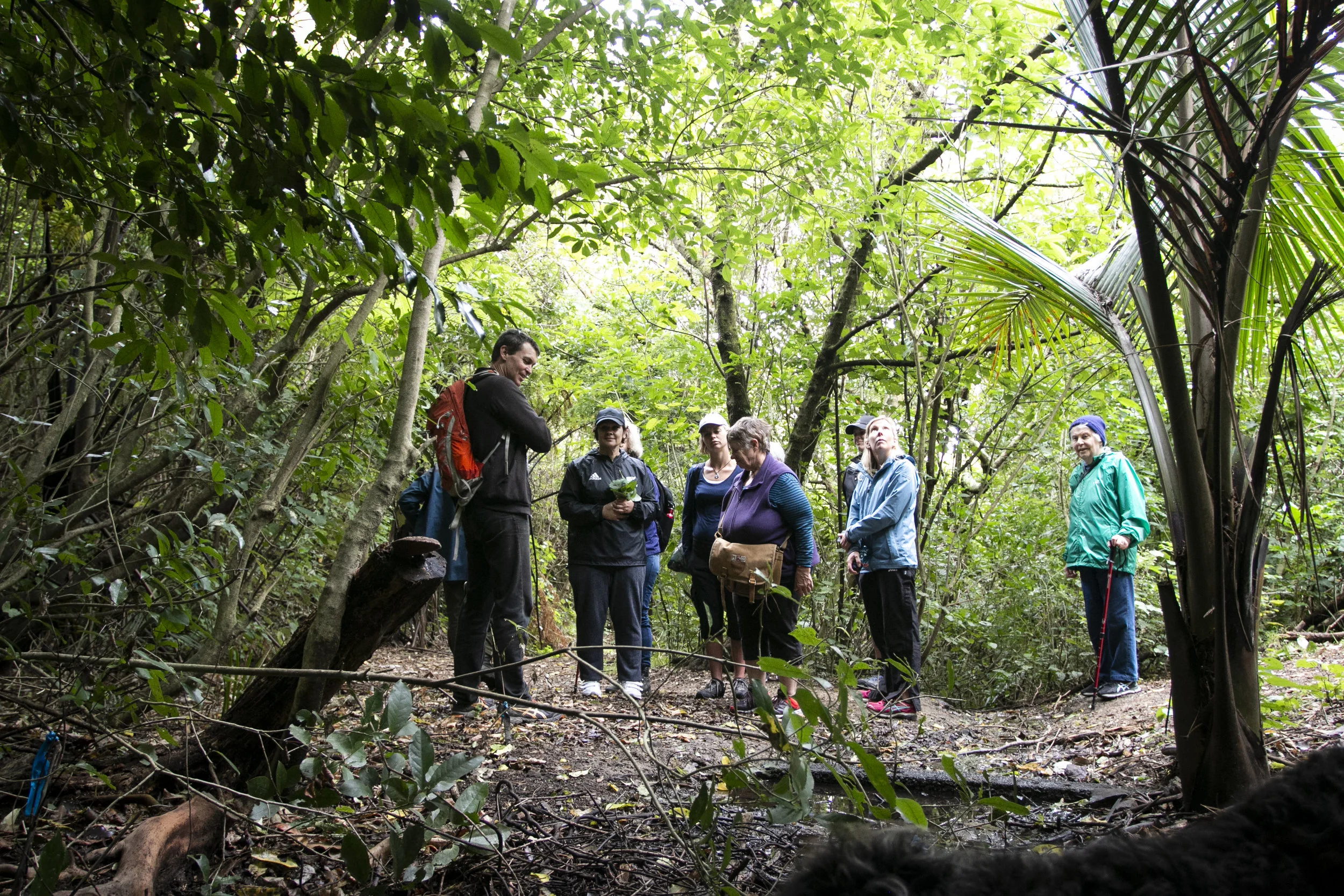
In the process of making new signs, we have been given new track names from the whanau at Tapu te Ranga Marae. The Tapu te Ranga Trust would like Manawa Karioi to be used and enjoyed by everyone. Let us know what you think of the new names, we will let you all know when we have our new signs made.
Te Ahi Kā - The long burning fires
This loop track encompasses most of Manawa Karioi. Its name refers to the home fires that symbolise a group’s title to land through continuous land occupation.
Te Uma i Mokotia - The chest that was marked
This track was planted with rātā which flower red in the Spring and Summer. The name connects the track to Ngā Pari Whero, the Red Rocks, a significant landmark in the area. Kupe’s daughter, Hine-te-ura, cut her chest in grief as she feared that her father had died, staining the rocks red with her blood.
Kōiwi Tohorā - Whale bones
This track runs closest to the coast. Its name honours the marae’s connection to Tohorā, (whales), the South Coast and Te Raukawa Moana, (Cook Strait).
Meri Whaiora - A transliteration of Mary and Fowler
This track leads up to the reservoir. Its name honours those whose support was crucial to establishing Manawa Karioi and building Tapu te Ranga Marae. Meri for the Sisters of the Home of Compassion. Whaiora for former Mayor Sir Michael Fowler.
Whakatūranga - Establishment or formation
This track runs through the heart of Manawa Karioi, including Seed Source Gully. It is named for the core values of the Tapu te Ranga Trust, which are whanaungatanga, kaitiakitanga, turangawaewae and rangatiratanga.
Te Whare Āhuru - The protective house
This track leads towards Tapu te Ranga Marae. It was named after the mōteatea or lament composed to honour Bruce Stewart’s passing. It refers to him as being the “protective house” watching over those coming to the marae.
Wawata -To desire, yearn for, aspire or daydream:
This track passes through some of the earliest plantings and shows what all of Manawa Karioi aspires to become.
Moemoeā - To have a dream, to have a vision:
From this highest track you can look out across the land and see the fruition of dreams past or dream new dreams of your own.
Union Road - This track is named after the trade union workers who built it. It provided access for the construction crew to build the reservoir below the Manawa Karioi springs, supplying water to the Home of Compassion.
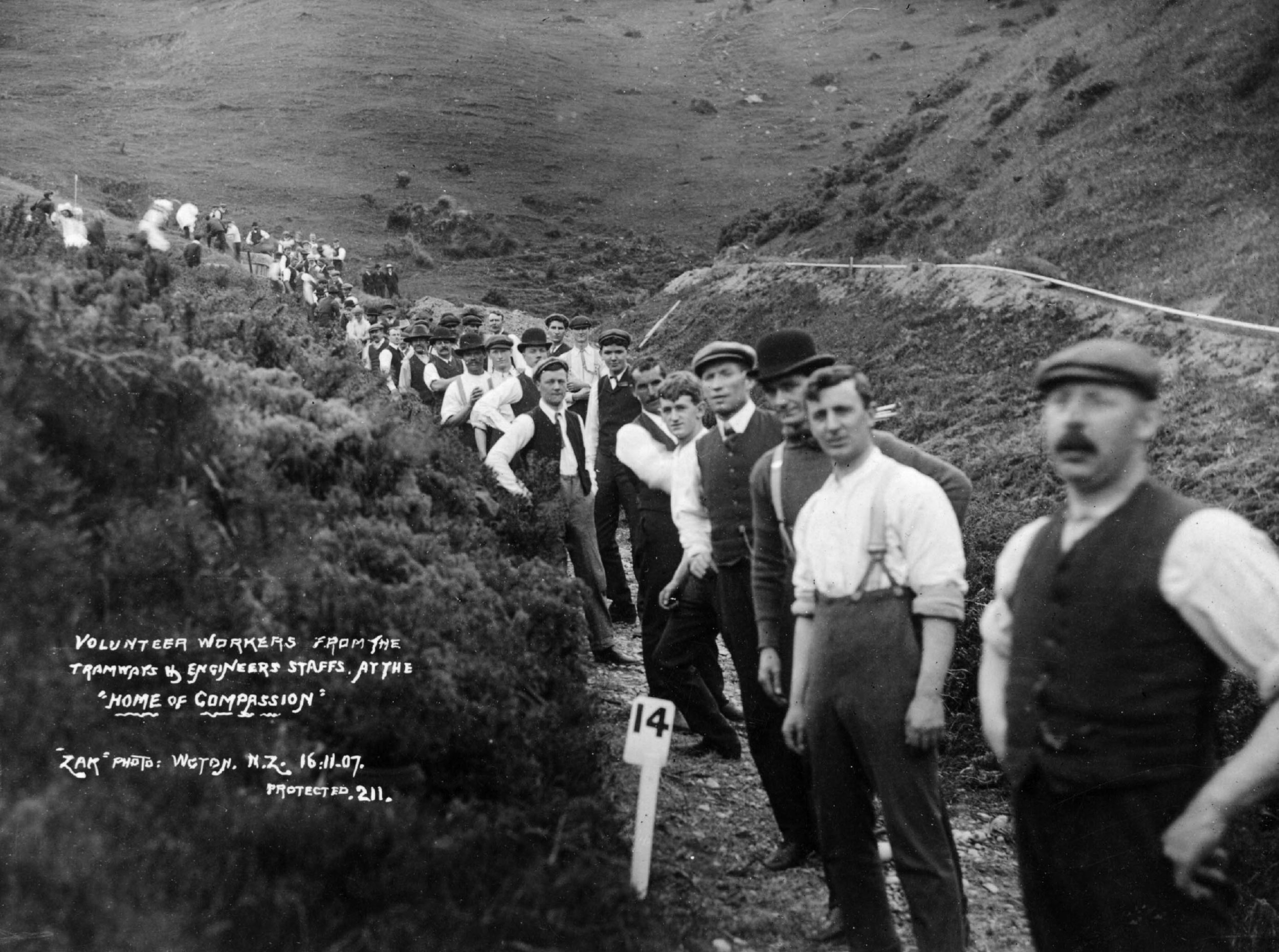
Volunteer workers building Union Road, Photo from the Home of Compassion Archives (23.11.1907)
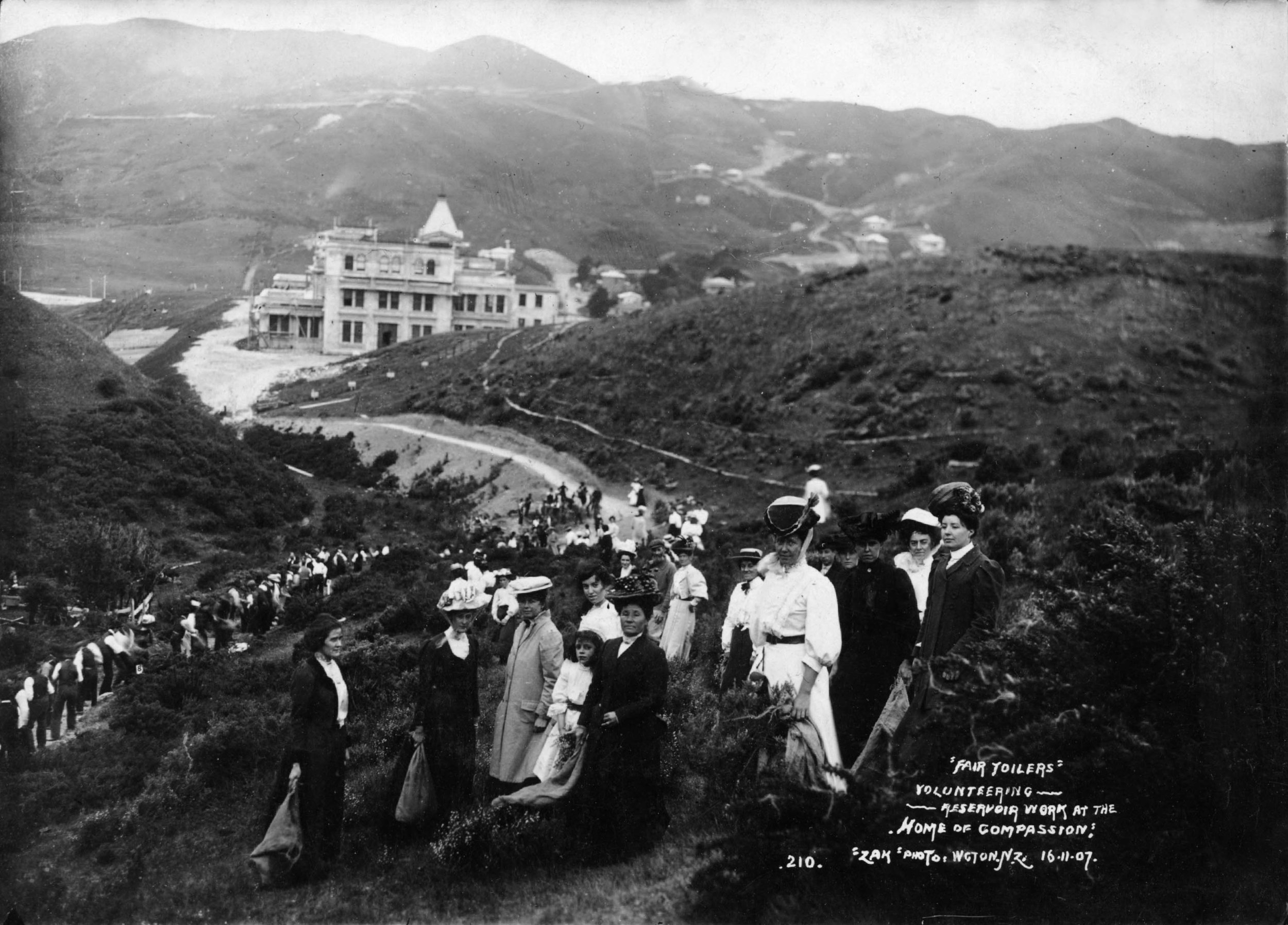
Volunteer workers building Union Road, Photo from the Home of Compassion Archives (23.11.1907)
Botanical Society Visit to Manawa Karioi
7 July 2018: Manawa Karioi Reserve
Eleven people braved the cold showery weather and were rewarded with a largely clear day for their exploration. Manawa Karioi is easily accessible from Danube St or Rhine St, Island Bay. Although privately owned by the Tapu Te Ranga Marae Trust, it is publicly accessible. As one of Wellington’s earliest restoration projects, and one which has been undertaken with ecological integrity from the outset, it is worth botanists’ attention and has recently been included in a comprehensive Waikato University study of urban forest restoration sites across NZ.
We traversed the main tracks in the northern part of the reserve and spent most of our time in two gullies where a range of restoration plantings have been concentrated. We had the benefit of an early (1992) species list compiled by Maggie Wassilieff, and a comprehensive up to-date list compiled by Pete Russell. The latter included a vast list of plant pests and other adventive NZ native and introduced species, indicating the size of the task any reserve manager hoping to undertake serious ecological restoration in a city suburb must undertake. We inspected and discussed the range of species planted.
In recent years Manawa Karioi has enriched the early planted successional species such as ngaio, Veronica parviflora, Coprosma spp, puka, kawakawa, māpou etc., with small numbers of later successional species including tawa, kohekohe, northern rātā, porokaiwhiri, Sophora spp, black maire, and the podocarps rimu, mataī, miro, kahikatea and tōtara, plus a few vines including kiekie and puawhānga.
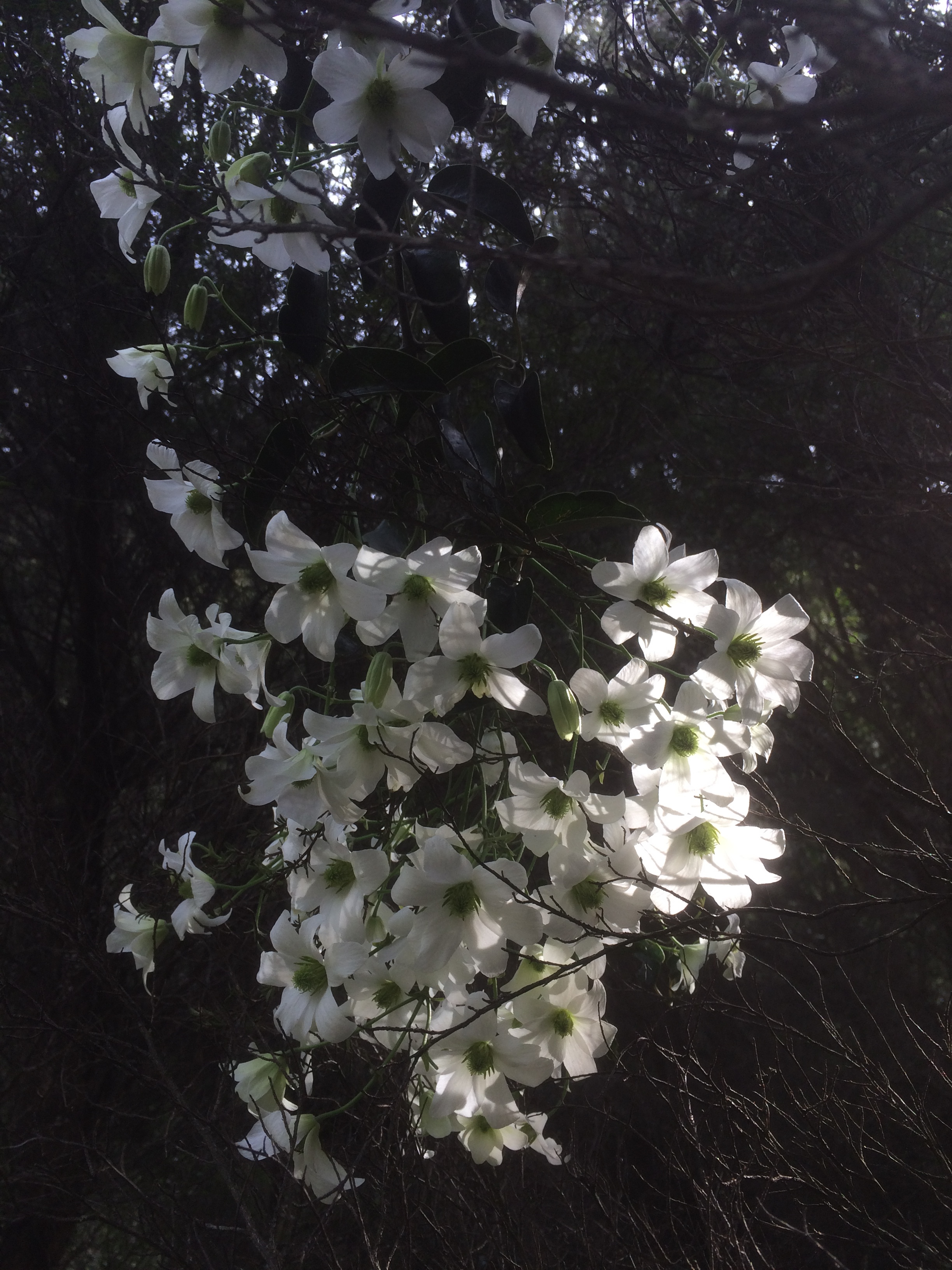
All species planted since the start have been locally ecosourced. We were pleased to see the range of planted species that are now freely regenerating, including tōtara, ngaio (very prolific and probably now the most significant forest canopy dominant), kōwhai, and many smaller broadleaved trees. We also saw small apparently regenerating puawhānga (now flowering, see photo), and a few planted swamp maire which are doing well. Thanks to Eleanor who collated the species observations which included several additions to the list, including six fern species. We also observed for the first time Coprosma areolata which may well have selfintroduced from Tawatawa Reserve across the ridge. Non-local natives such as karaka, karo, lacebark and five-finger hybrids are also thriving, and we discussed weed control priorities, which Manawa Karioi are now reassessing.
Our pick of the most urgent control priorities included climbing asparagus, wild ginger, Darwin’s barberry, flowering cherry, privet and karo. With the exception of karo, these are all of relatively limited distribution in the reserve. We felt that generally the reserve was in good condition with fewer weeds impeding native succession than in comparable Wellington reserves.
Participants: Paul Blaschke (leader/scribe), Eleanor Burton, Gavin Dench, Michelle Dickson, Richard Grasse, Kate Jordan, Rodney Lewington, Russell Poole (Palmerston North), Peter Russell (Manawa Karioi group), Sunita Singh (co-leader), Xavier Warne.
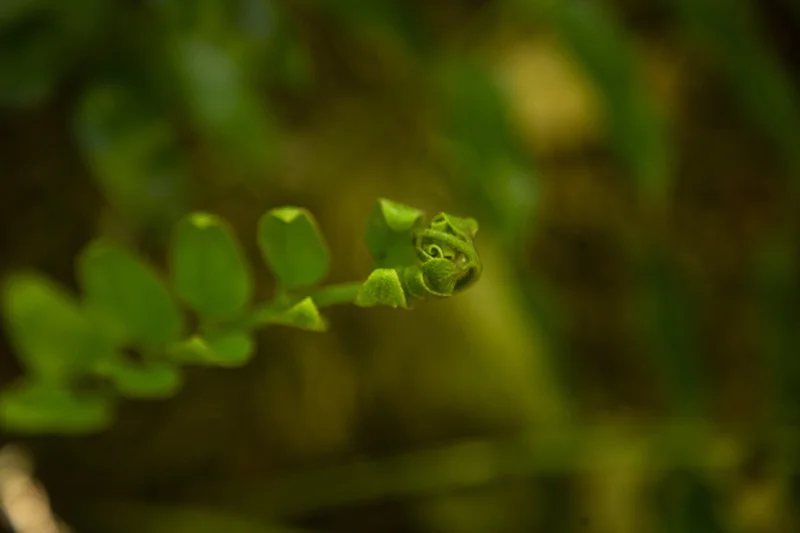
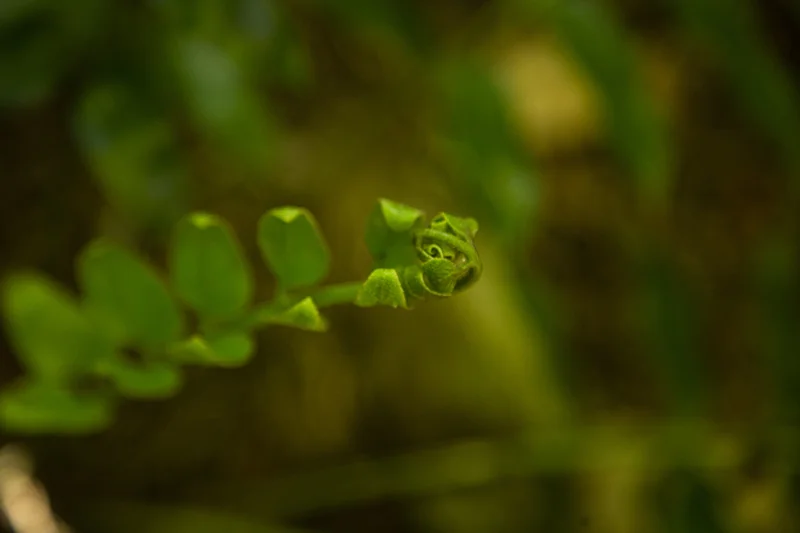
Volunteer Scrub-cutter Operators Needed.
We are looking for Volunteer Scrub-cutter Operators for mowing the grass on the tracks through the reserve with a scrub-bar every 6-8 weeks during the period November - April and less frequently during the rest of the year. Each volunteer will be responsible for a section of track that will take about 2 hours to mow. The scrub-bar and fuel and safety equipment will be provided by us. We are an ecological restoration project in Island Bay that is open to the public and is a valued recreational resource for walkers: runners: mountain bikers and horse riders. We would like scrub-bar operators to commit to doing the job for a minimum of 6 months and would be delighted for them to continue beyond that for as long as they like.
Contact us to register your interest - manawakarioisociety@gmail.com
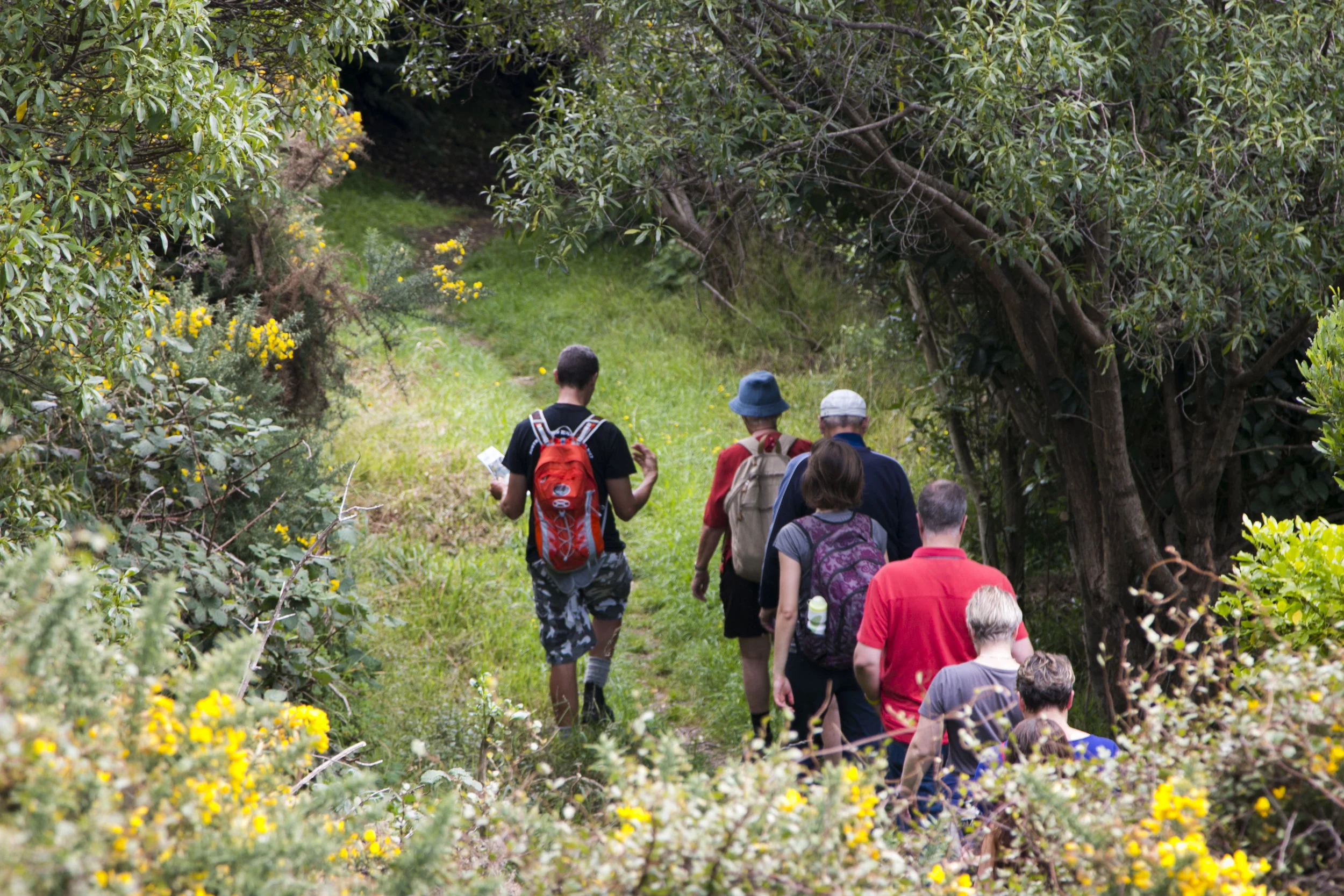
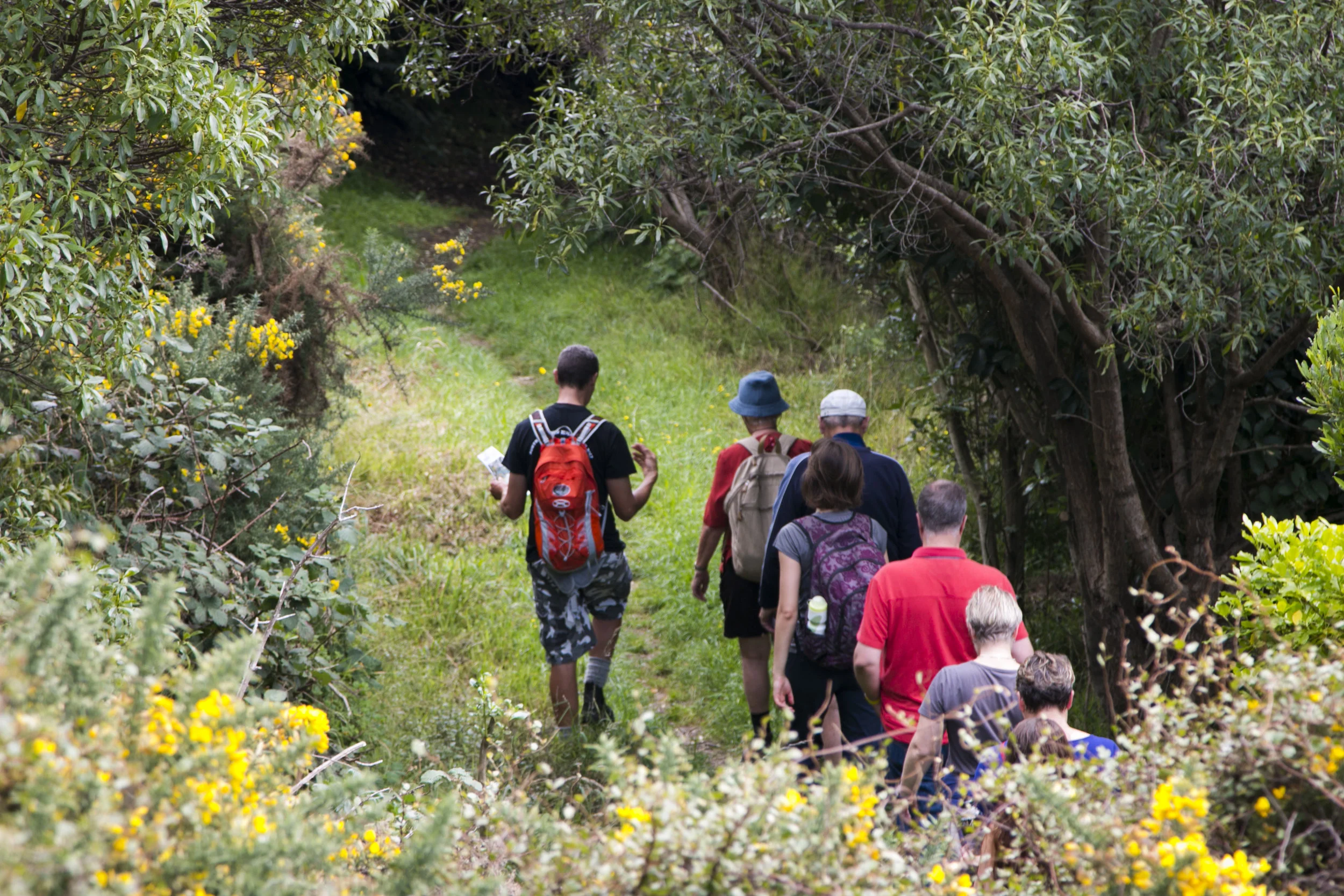
Guided Walk at Manawa Karioi - 2019
We are hosting two of our popular guided walks at Manawa Karioi in March 10th at 11am and 1pm.
Join us for a casual walk around the tracks with a Manawa Karioi with some of our committee members and hear about the progress of the restoration project, hear about the history of the land and discover some new tracks.
Please bring a gold coin koha that will go towards the running costs of our project. Dogs are welcome on leads.
Meeting at Tapu te Ranga Marae carpark by the interpretation board at the end of Danube Street.
Birds Eye View on the Reserve
I met Malakai Tupou many years ago on one of my many visits to the Marae. Malakai is the grandson of Bruce Stewart and is of Tongan and Maori heritage. A builder by trade, Malakai is now living at the Marae in a whare bearing his name.
Last month I asked Malakai if he could get some images of the Manawa Karioi Reserve with his drone so we can document the progress of the restoration project and see the reserve from above as the birds do.
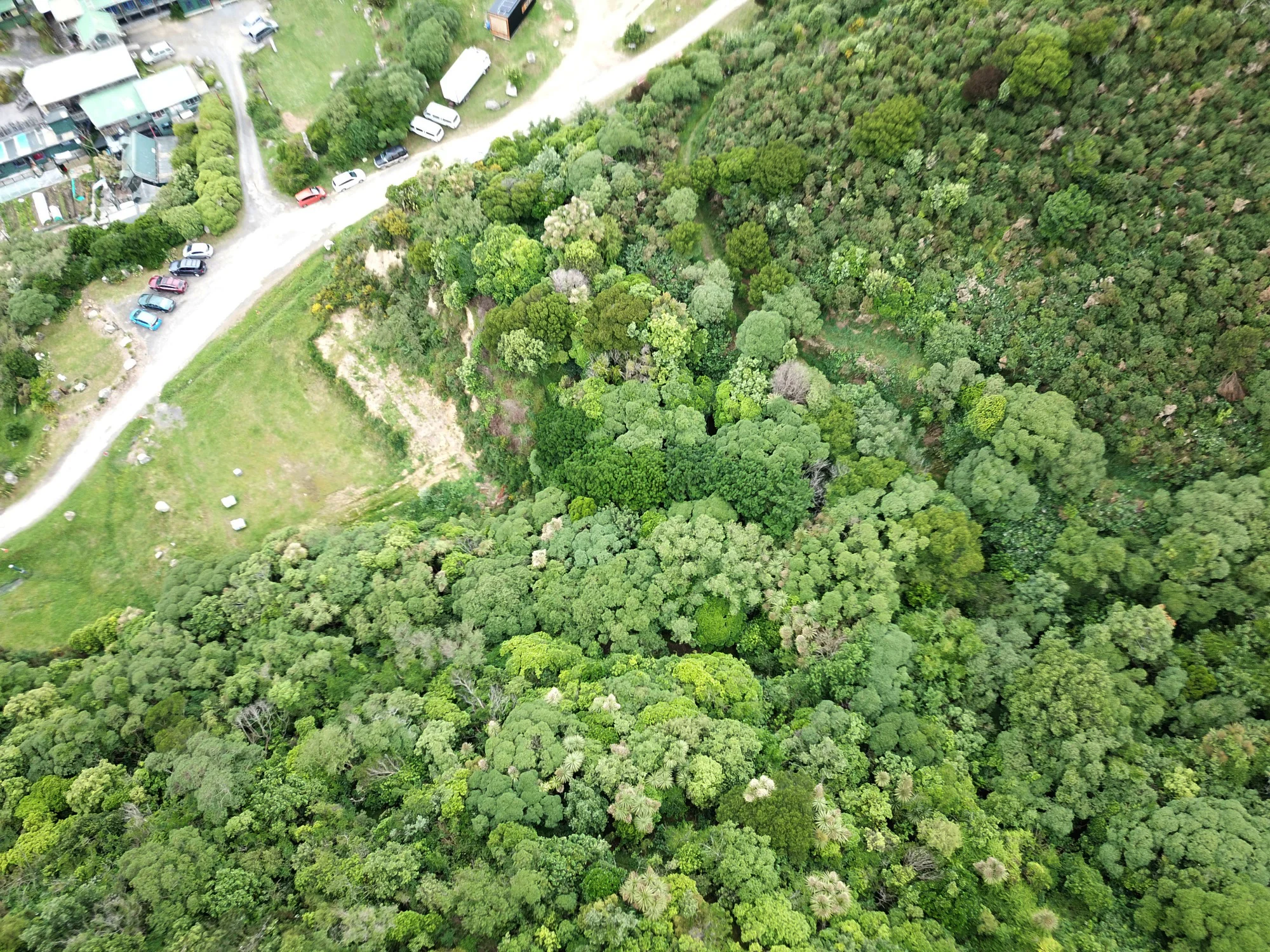
Tell me about your history with Tapu te Ranga Marae?
I’m a grandson of the founder of Tapu te Ranga, Bruce Stewart, so have been coming here since a wee kid, de-nailing timber and straightening out nails was something I remember doing as a kid.
Do you use the Manawa Karioi reserve yourself (how)?
I use it nearly every day to walk my dog, there are lovely bush walks and views.
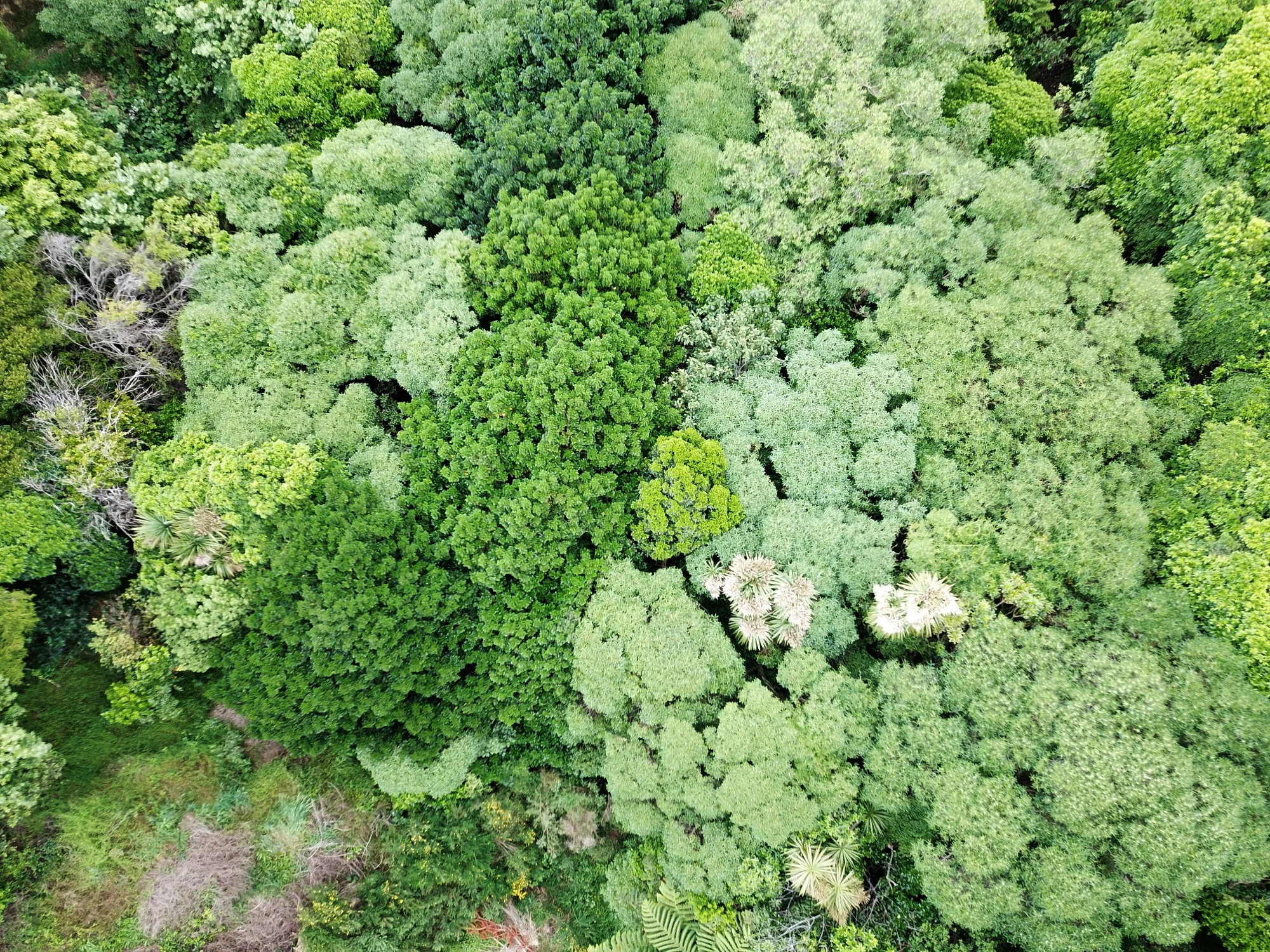
What is your impression of how the Manawa Karioi land has changed over your years of living here?
When I was a kid, I remember walking up with the cousins to the pine trees and surfing down with cardboard trying to dodge the gorse, nowadays you can't as the native trees have pushed through and have created the lovely native bush we have today.
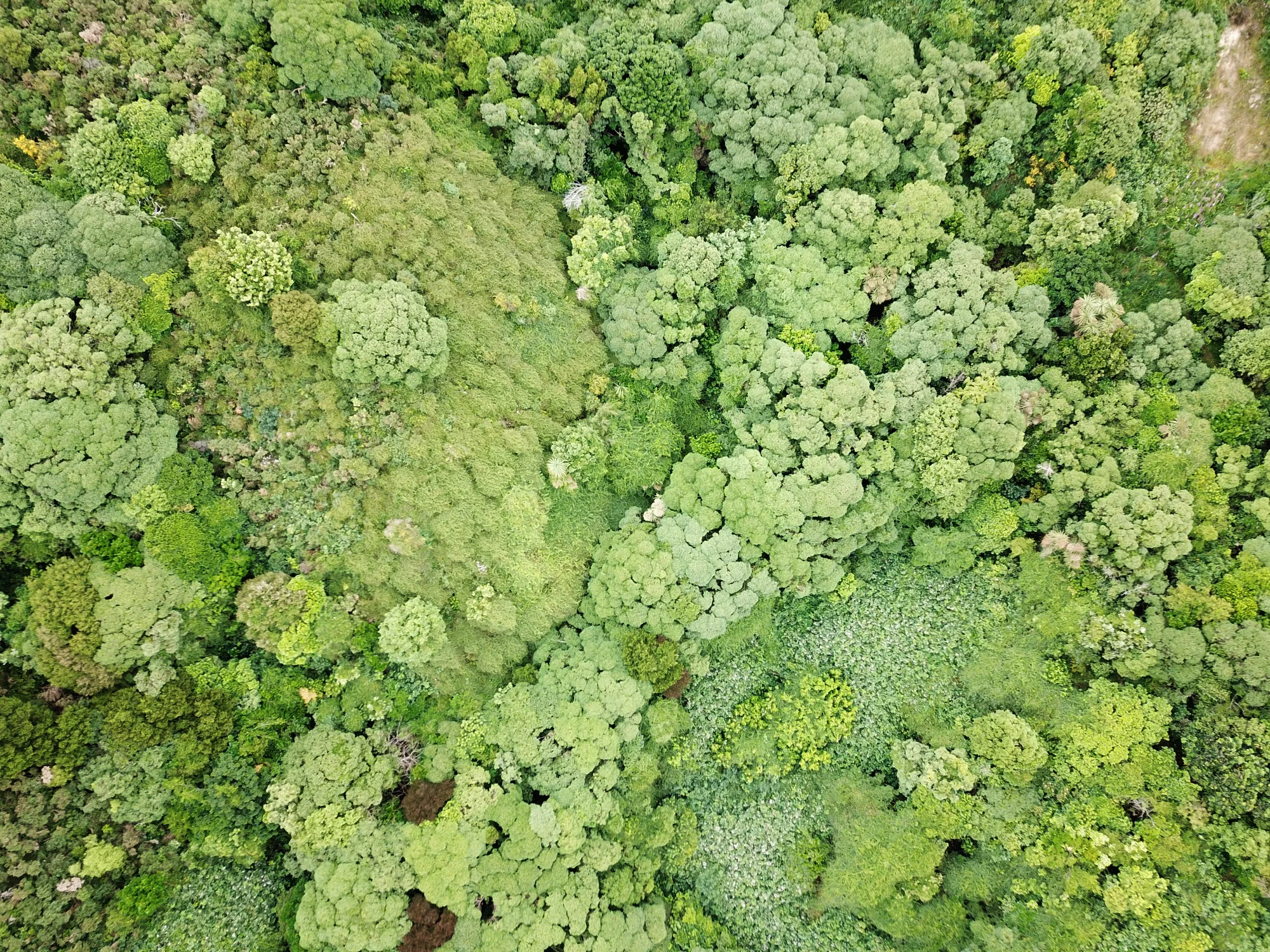
Tell me about your experience taking the drone photos, what were the challenges?
The day was a little windy so didn't want to fly too high, also there are planes that fly above so I just had to keep an eye out for them.
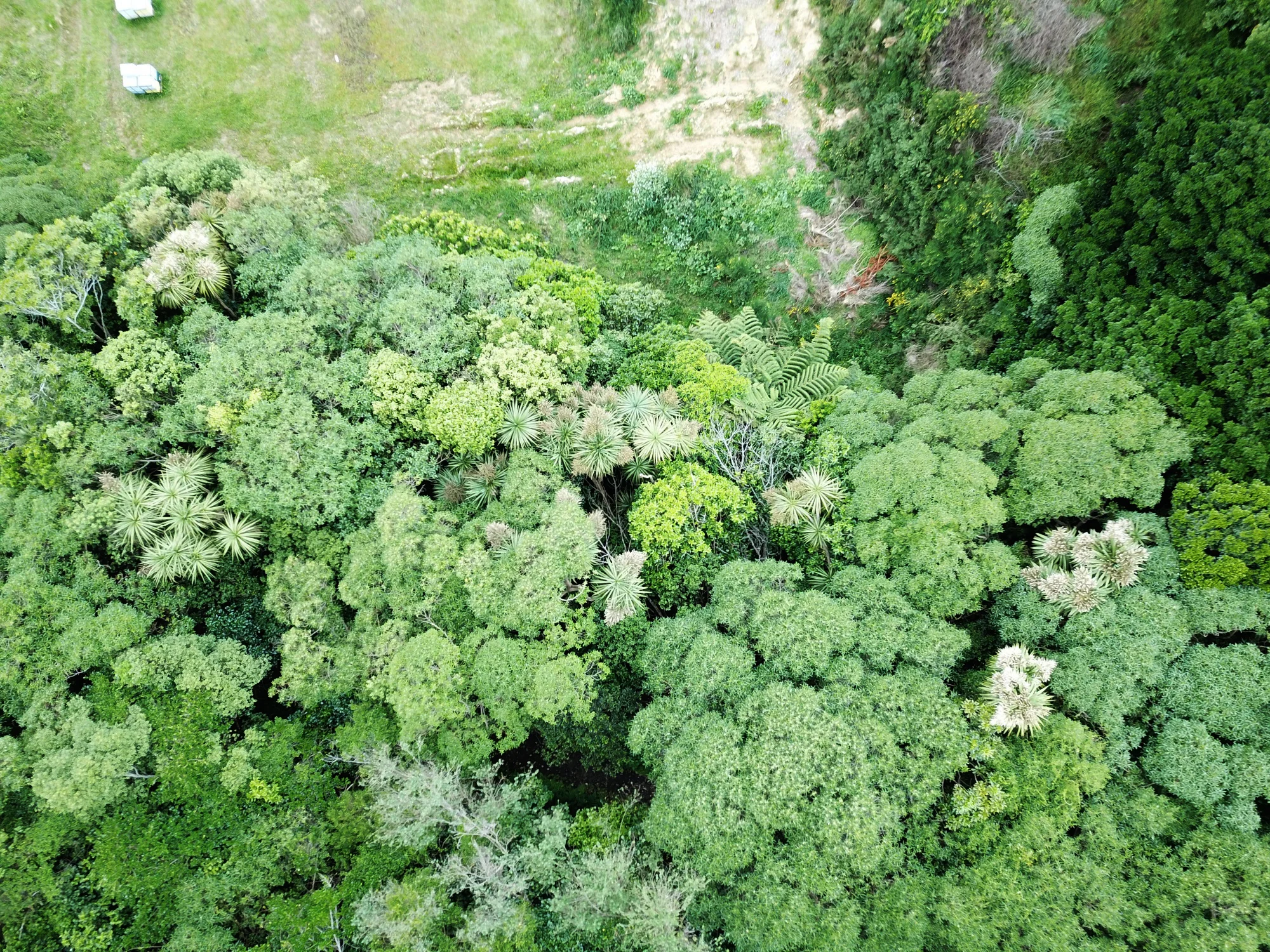
Do you see people using the tracks, what do you think this reserve gives back to the local community?
I see a lot of people using the tracks, dog walkers to tourist walkers to runners, the locals I talk to love the tracks and enjoy walking.
The reserve gives the locals a place to call home (their backyard) its place that will never stop giving with its walking tracks to the natural enrichments that it gives us,
My grandfather once told me in one of many of his ideas he shared with me that, if everyone planted a native tree in their backyards it would benefit our future generations, and how true is that. To have one of the best reserves in Wellington in your backyard is awesome.
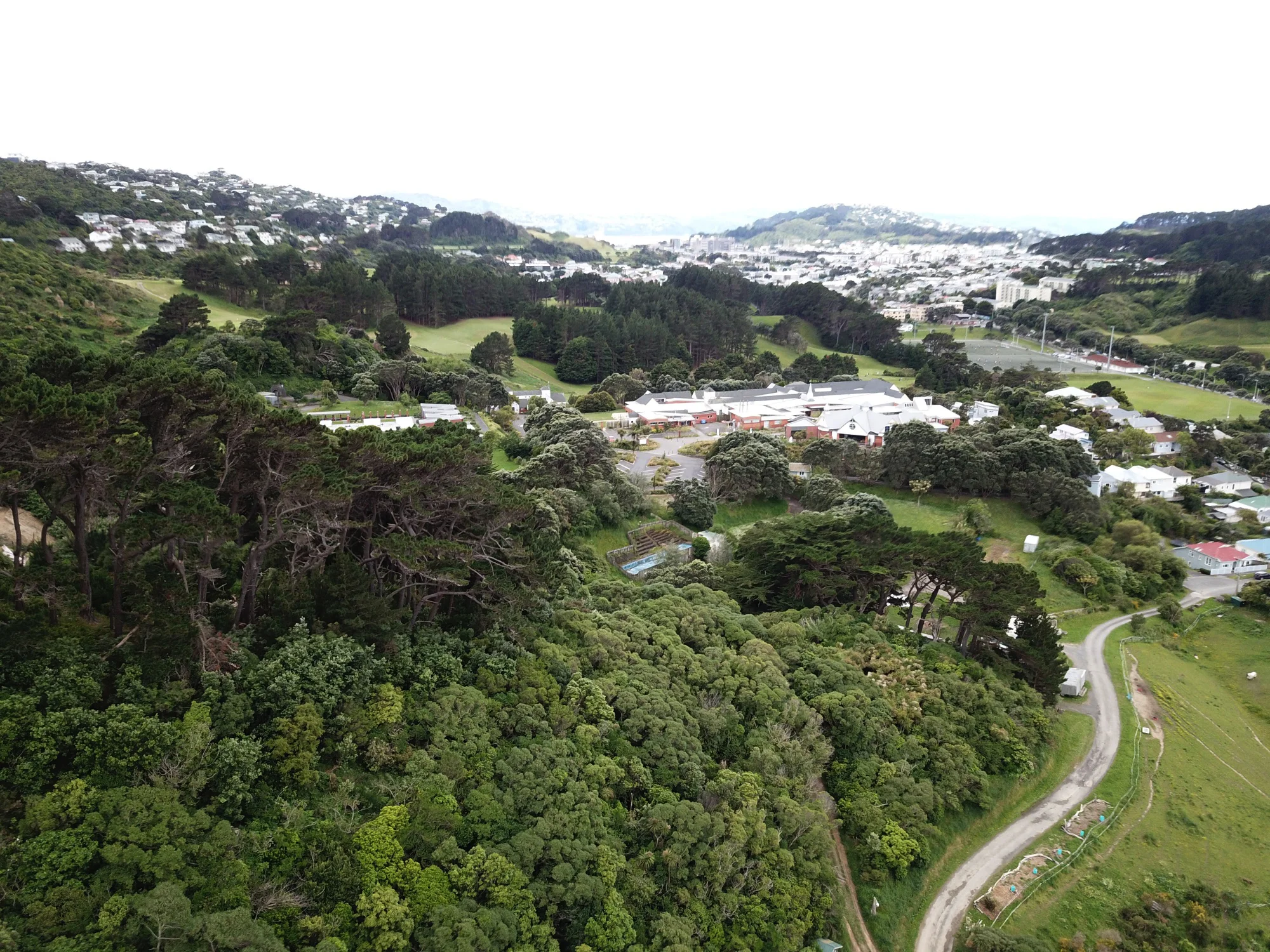
Introduction and Questions by Ness Patea.
Mental Health Awareness Week (MHAW) Picnic and Walk
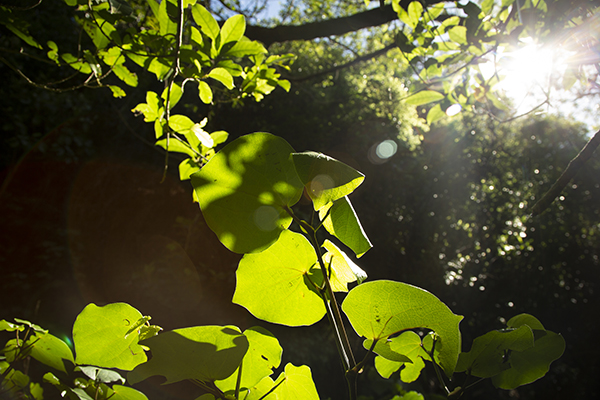
To celebrate Mental Health Awareness Week, The Island Bay Community Center and the Manawa Karioi Society would like to invite you to a community picnic at the Manawa Karioi Ecological Restoration Project.
The theme for the Mental Health Awareness Week is ‘Let Nature in’ so we have found a picturesque flat grassy spot that is just 5 minutes walk from the Tapu te Ranga Marae carpark in Island Bay.
Pack a picnic of delicious snacks, gather your family and friends and join us for our community picnic in the regenerating native forest of Manawa Karioi. Children and dogs on leads are welcome. Meeting at 2pm at the interpretation shelter in the Tapu te Ranga Carpark and we will have signposts for any late arrivals. Depending on interest we can lead a bush walk on the tracks after the picnic around 3.30pm.
Sunday 14th October, starts at 2pm - 5pm (Postponed until next week - 21st October)
Meet at the Tapu te Ranga Marae carpark and at 2pm, walk up to the picnic area.
Postponement Date:
Sunday 21st October - 2pm - 5pm
Studying Restoration Projects in Aotearoa
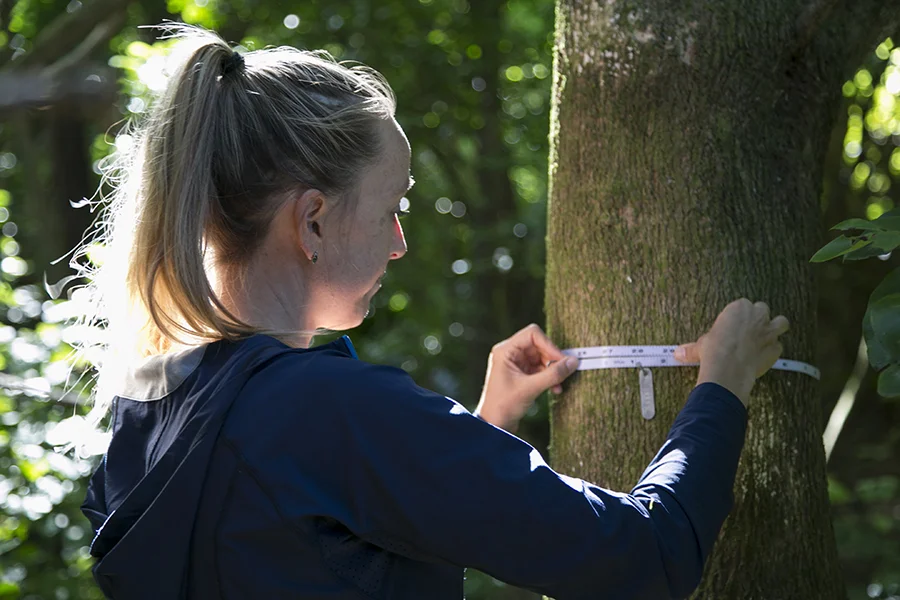
Katherine has chosen Manawa Karioi as a research site and because of its age, she has made two research plots on the site.
She gave me a tour of the two plots she has measured at Manawa Karioi and she talked me through how she is collecting data to help other restoration projects in the future.
I first met Katherine de Silva online, she was asking a question on the 'Wild Plants of Wellington' Facebook group.
She came along to one of the Manawa Karioi working bees and we all met her.
Since then, Katherine has chosen Manawa Karioi as a research site and because of its age, she has made two research plots on the site.
She gave me a tour of the two plots she has measured at Manawa Karioi and she talked me through how she is collecting data to help other restoration projects in the future.
Katherine is now on the road in a campervan, studying forty-five restoration plots throughout the country as part of her Master's Degree with Victoria University.
Tell me a bit about yourself?
I finished my bachelor in Environmental Science in 2010 and since then I have been contracting in a variety of roles - field technician, herpetologist, trapper, ecologist, biocontrol officer etc. I decided at the end of 2016 that I would start my Masters in Ecology and Biodiversity which I’m now half way through. I began my field season conducting research into urban restoration through the VUW on 1 December and will be working full time in the field in the South Island until probably April 2018.
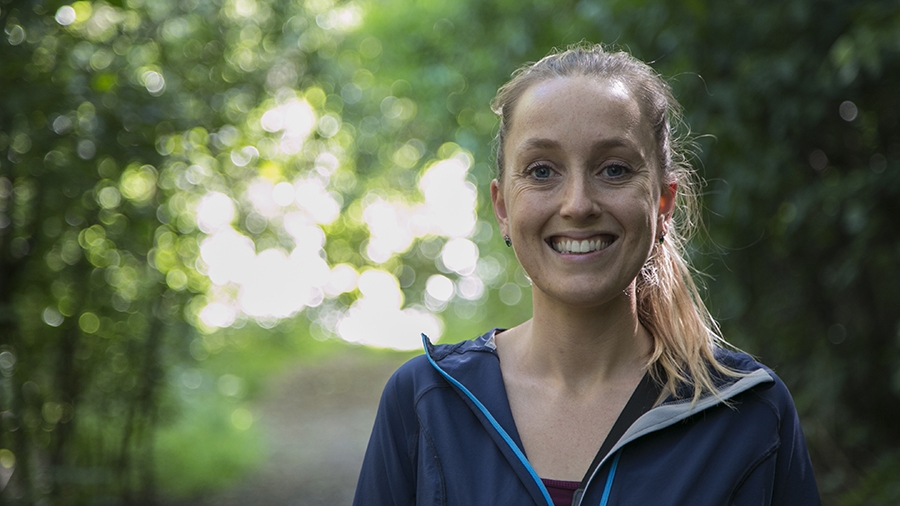
Katherine de Silva at the Manawa Karioi Site.
Why did you choose this field of research?
I’ve had experience doing vegetation surveys before and I have thoroughly enjoyed spending these days in our forests working with and learning about our native flora. So, I took on a thesis project that would allow me to improve my skills in plant identification, which is a very important skill set in ecology, and that would allow me to spend time working in ecosystems I really enjoy. I also understand how important the implementation of urban forest restoration activities has become, as it is a key tool to improve ecosystem services, function, resilience and biodiversity. So, to be part of a project that will help us understand how we can improve the trajectory and success of restoration activities in degraded urban environments is exciting.
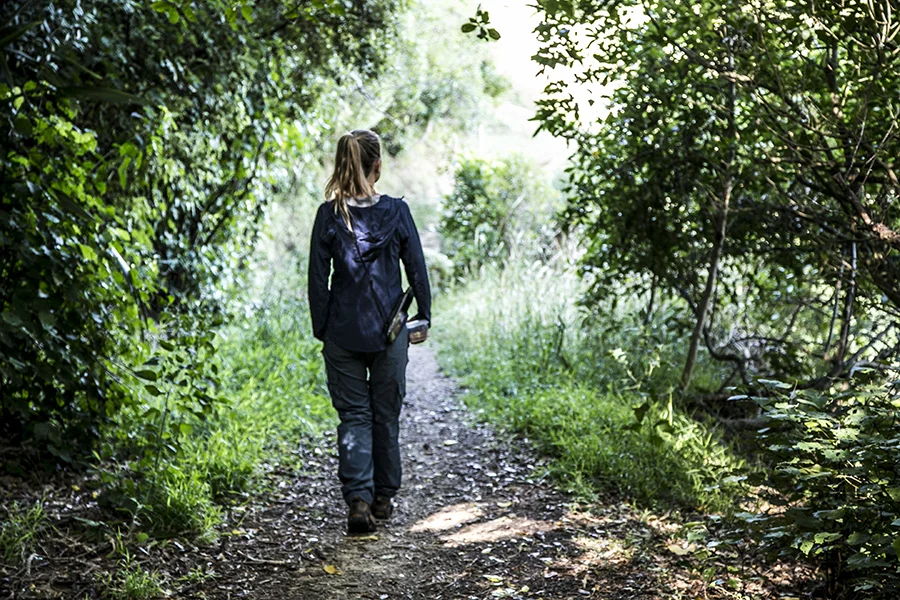
Walking the tracks to get to the Manawa Karioi Plots
What is the purpose of your Masters study?
The goal is to understand the factors that constrain or promote plant regeneration in urban forests planted up from scratch. This work directly addresses many key restoration questions such as “what are the microhabitat requirements for the missing plant species we aim to reintroduce?” and “what natural succession is happening in urban forests?”. Restoration planting activities are common practice across New Zealand, where bare, degraded land is re-planted in order to improve biodiversity, ecosystem function and social benefits. While establishment of the initial canopy has been relatively successful, the regeneration of late-successional native trees, shrubs and epiphytes beneath the planted canopy, a key process in forest succession, is generally lacking. This research will hopefully assist practitioners to understand factors limiting or triggering natural regeneration, a key indicator of success.
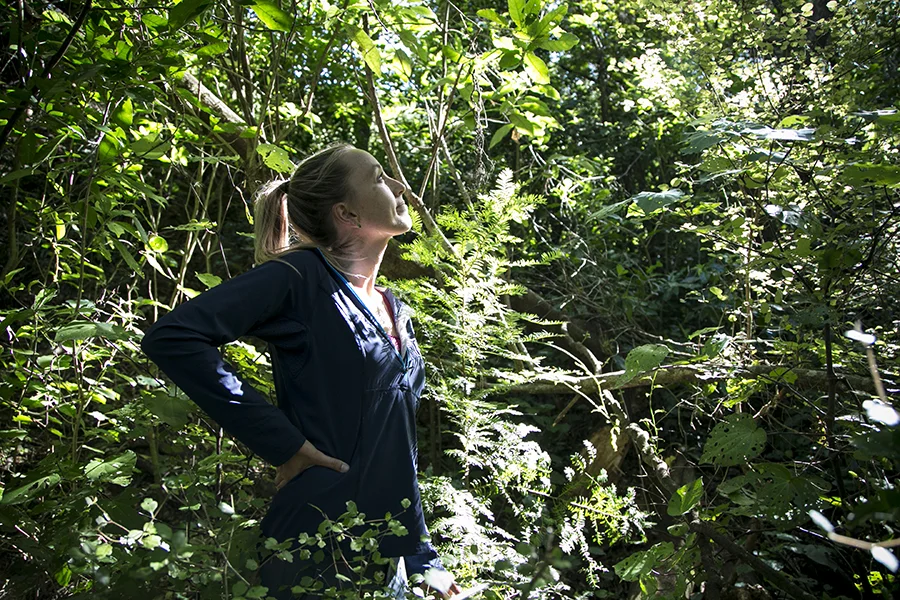
A light well in the canopy from a fallen tree.
Tell me about the methodology behind the research, how is your study structured?
I will be installing permanent plots across 5 cities (Wellington, Nelson, Christchurch, Dunedin and Invercargill), spanning a large climate gradient within NZ. 45 research sites have been selected to have the structure, composition and environmental conditions measured. Our sites will sit within age categories (young, intermediate, old), providing an understanding of the short-term (1-10 years) to medium-term (10-60 years) successional dynamics of restoration plantings, processes that are virtually unknown in New Zealand cities. Understanding how light, microclimate, and understorey conditions change over the first 60 years of development will provide Councils with critical information for long-term planning to maximise efficiency of resource allocation.

Measuring the light from the canopy.
What kind of preparation did you undertake before starting this study?
To find out if the methodology we chose to undertake the vegetation surveys were appropriate, we did a small pilot study at two sites in Wellington (Tawatawa Reserve & Manawa Karioi). We set up two permanent plots and conducted surveys, tweaking techniques and processes to find out what would work best. This was really helpful to set us on the right path, however we continue to fine-tune processes and efficiencies in the field as often things are highlighted once we start working, which we hadn’t thought of previously. to edit.
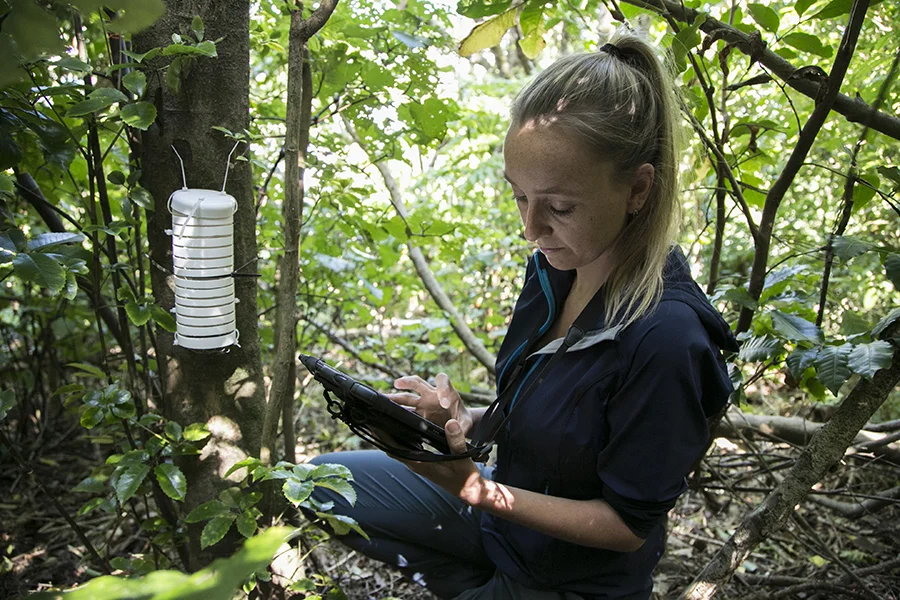
Katherine collecting data at the first Manawa Karioi plot.
Why did you choose Manawa Karioi as a site?
Manawa Karioi is the oldest planted forest site we could find in Wellington City, so we really wanted to get it in our research programme. In fact, because we had such strict criteria for our site selection, we couldn’t find any others over 25 years, so we ended up putting two research sites at Manawa Karioi.
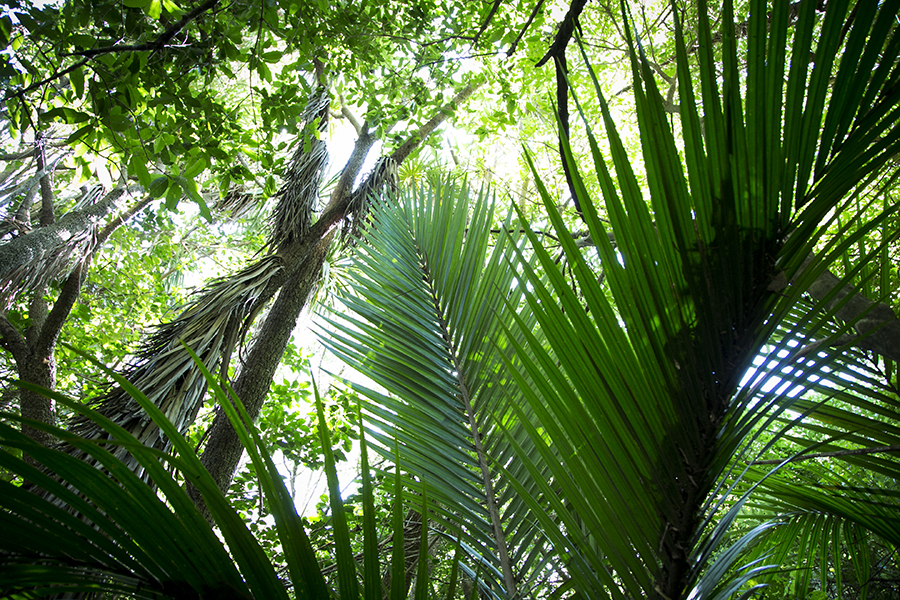
The oldest plantings at the Manawa Karioi site are the focus of the studies.
How have your field trips been going so far?
Fantastic! I have finished surveying all nine sites in Wellington. And as of today, we have finished site number 2 in Nelson – so 34 more sites to go in total! I have had some great experiences already, visiting the oldest restored site in Wellington was a highlight, with the plot being placed underneath a canopy of puriri, ngaio and Ti Kouka (cabbage tree). It was a very peaceful and relaxing site to work in, with lots of birdsong to keep us company while we crawled along the ground counting seedlings. Another highlight here in Nelson has been seeing a weka the first time myself in the wild - we were sitting on the ground next to the plot and the coolest curious weka came right up to us to check out what we were doing.
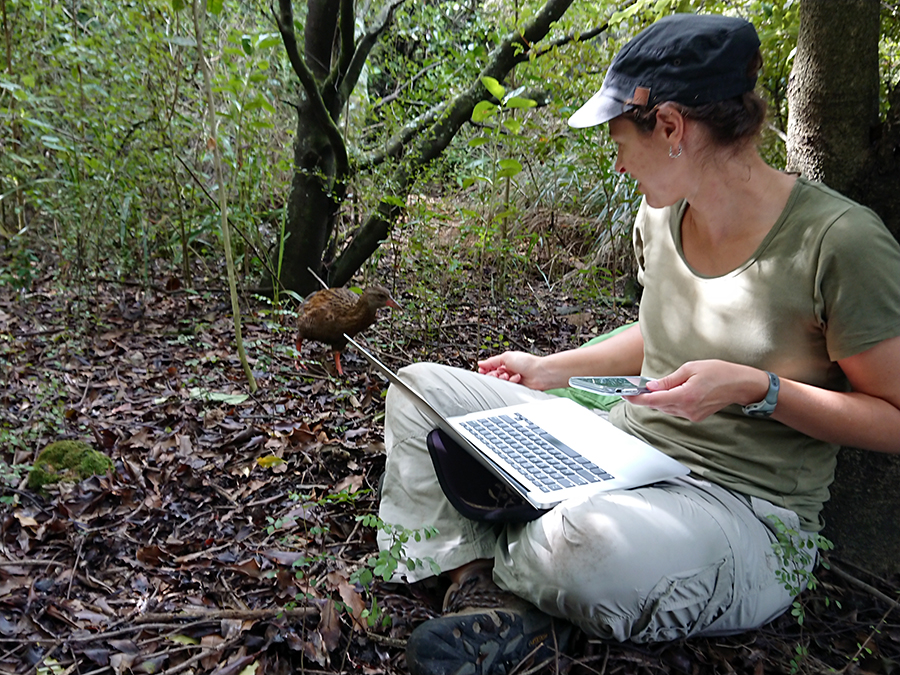
Spotting Weka in Nelson - Kiri Wallace is travelling with Kat and is the Plantings Team Leader from University of Waikato.
What value do restoration projects have in ecological terms?
Restoration activities in New Zealand started during the 1970’s and 80’s; initially seeking to undertake revegetation and weed control programmes on off-shore islands, mainland reserves and national parks. However, restoration programmes have since expanded into urban environments, with a shifted focus to repair biodiversity and ecosystem processes.
Restoration of ecologically functioning plant communities is a skill that has been refined through a few decades of lessons learned. Restoration practitioners now realise the importance of historical and ecological knowledge of the local landscape, to establish the most suitable composition of plant species, and have improved planting practices such as the planting of appropriate species to mimic the stages of forest and the use of eco-sourced seeds to improve planting survival and local genetic diversity. For many people, restoring degraded landscapes and especially those with little local seed source available, is due to the intrinsic value that we place on the living things and processes within forest ecosystems. It is also of high value to humans in order to provide resources and ecosystem services such clean water, fertile soils and purified air.
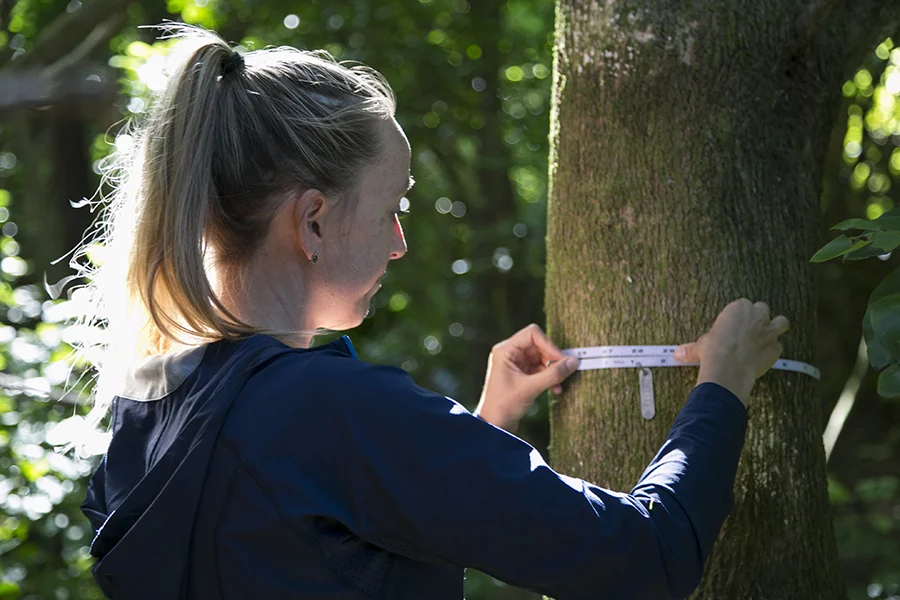
Measuring the trees in the Manawa Karioi Plot.
What outcomes are you expecting?
The results will be combined with a comparable study of cities within the north island, as part of a nationwide assessment under the People Cities & Nature (PCAN) Programme. We don’t yet know what we will find exactly, once we collect the data across all five cities and 45 sites, we will look at the data and see what it tells us. But we may get insight into some of the following areas:
· The composition, structure, regeneration, invasions dynamics in restored urban forests
· The micro-climate and regional climate influences on plant survival within restored urban forests
· Effect of canopy composition on understory plant assembly and natural regeneration of native seedling propagules
· Changes to dominant functional plant groups regenerating along a successional chronosequence at planted urban forest sites.
Our results will provide improved management recommendations and restoration guidelines for urban forest restoration in Wellington & other NZ cities.
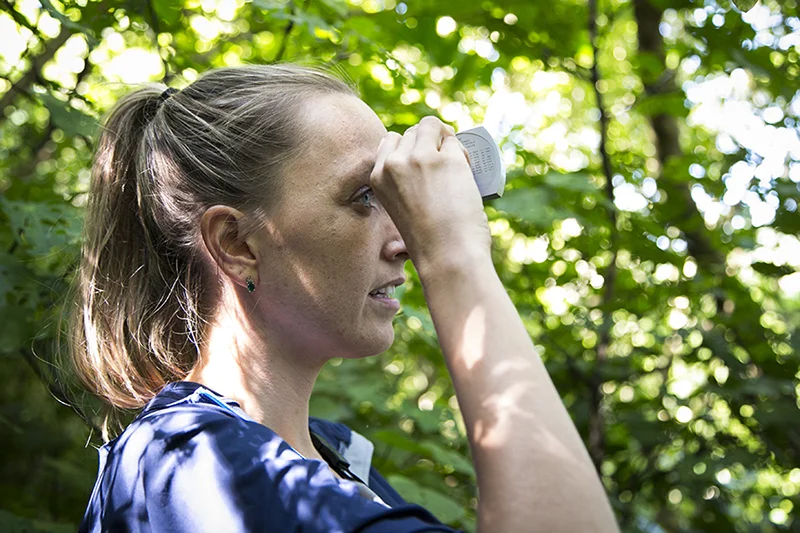
Finding the Horizon - Manawa Karioi
How will you share the outcomes of your research?
Communications on progress will take place between all PCAN research groups and other stakeholders including WCC, GWRC, VUW, UoW & regional Botanical Societies. The results will be distributed to all stakeholders in the format of reports, journal publications, talks and other stakeholder engagement activities. Results will also be submitted for publication in peer-reviewed journals and presented at conferences in 2019.
For more Information, a link to programme website and my own details:
Research Programme:
www.peoplecitiesnature.co.nz
https://web.facebook.com/peoplecitiesnatureNZ
Researcher Info:
www.linkedin.com/in/katherine-de-silva
http://www.silvaecology.com/
Photography and introduction by Vanessa Patea
What a difference a decade (or two) makes!
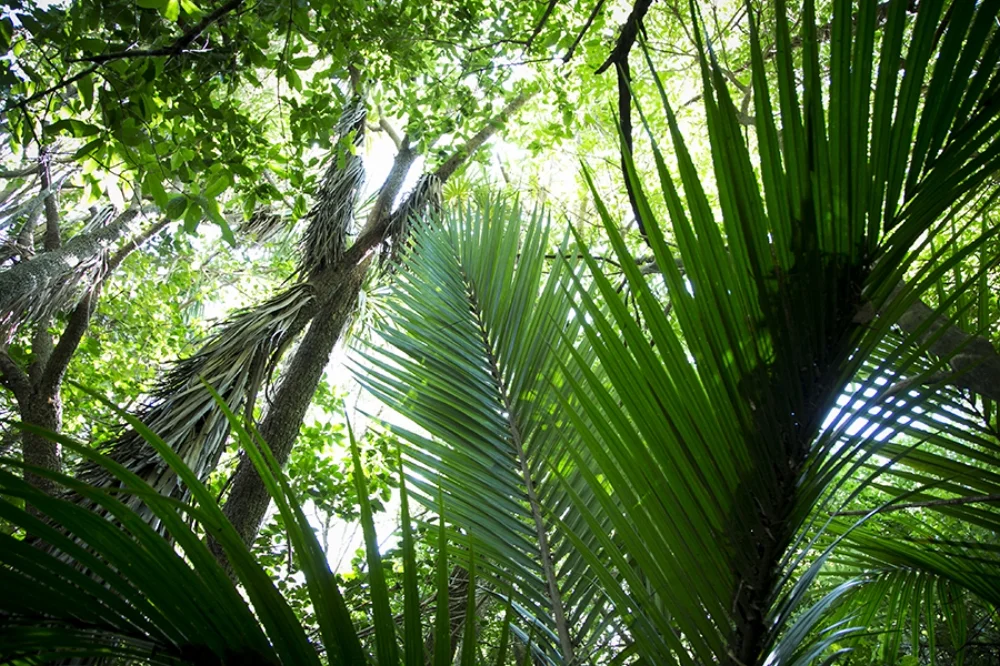
Nothing better illustrates the progress that can be rapidly made than a few photos that were taken decades apart. Here are three views looking at the main gully and hillside above the Tapu Te Ranga Marae carpark, and one shot from under the established canopy.

This photo was taken around 1994. The first plantings were done in 1991, and most are around 1 metre high. Notice that gorse is rapidly taking over the grassy slopes of the former farmland.
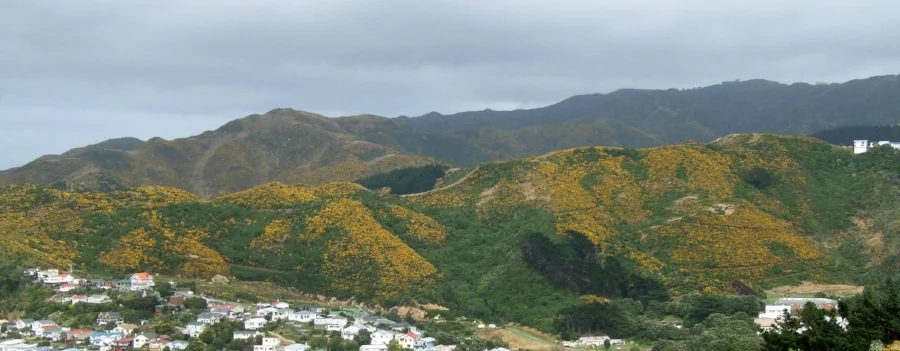
Photo 2 was taken in 2008. The canopy has gotten taller, and the plantings are spreading up the gullies. The gorse has also gotten taller and has become a major problem (along with blackberry) by blocking the tracks, which require a lot of effort to keep open. What isn't visible is that a lot of natural regeneration is occurring under the gorse. The seed source for this comes from the faster-growing species that have already been planted, as well as from nearby regenerating bush in the surrounding Town Belt.
10 years earlier work had begun on establishing understory and future canopy and emergent species, with many nikau, as well as kahikatea, matai, miro and others
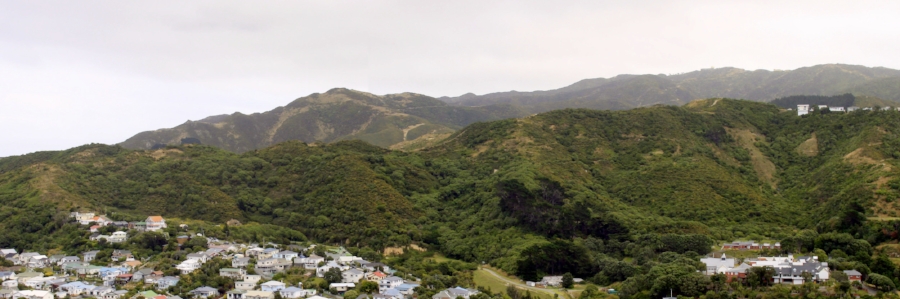
Photo 3 was taken recently in early 2018. Like the other two photos, it was taken when the gorse was in flower (bright yellow flowers) as this is the best way of distinguishing gorse from other vegetation. The first thing that really strikes you is how little gorse there is now. Many years of planting along the track sides have resulted in the gorse getting shaded out and dying off, making track maintenance much easier. This method also eventually shades out the blackberry. The canopy has grown up to 15 metres high in the lower gully, and the diversity of underplantings has greatly increased. Natural regeneration continues, with kawakawa becoming abundant. This plant gives this coastal part of south Wellington its' original name of "Paekawakawa".
As gorse is highly flammable, the risk of accidental fire is greatly lowered when forest returns, as many native trees are not as combustible. This has been shown from a couple of accidental fires at Manawa Karioi (possibly started by discarded cigarette butts) and also from several deliberately lit fires over the hill in Happy Valley.
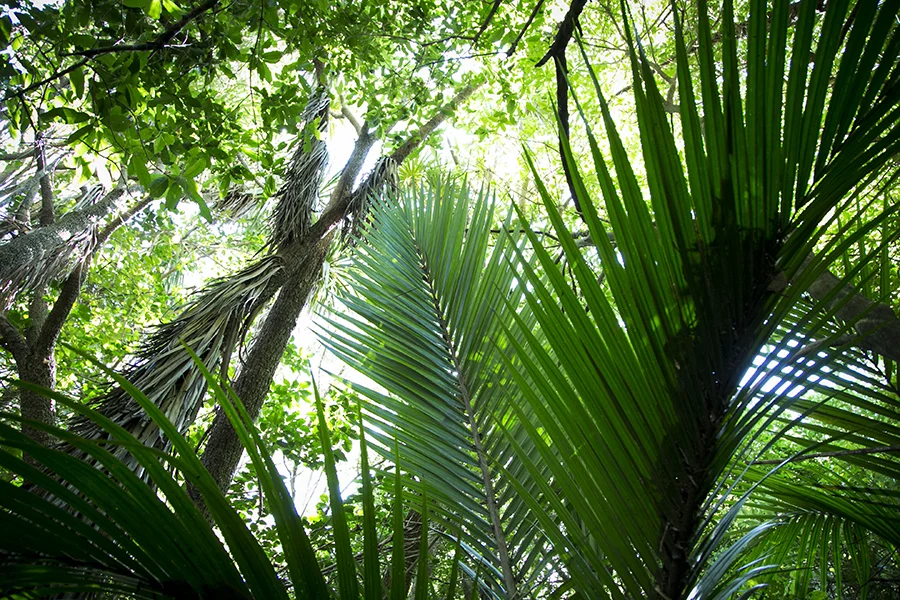
A shot looking up at the canopy near where the fresh-water spring emerges. 20 years ago this was a sunny clearing choked with blackberry. Now the nikau and some of the podocarps are between 3-5 metres high!
Written by Ross Gardiner
Photos by Bernard Smith, Vanessa Patea
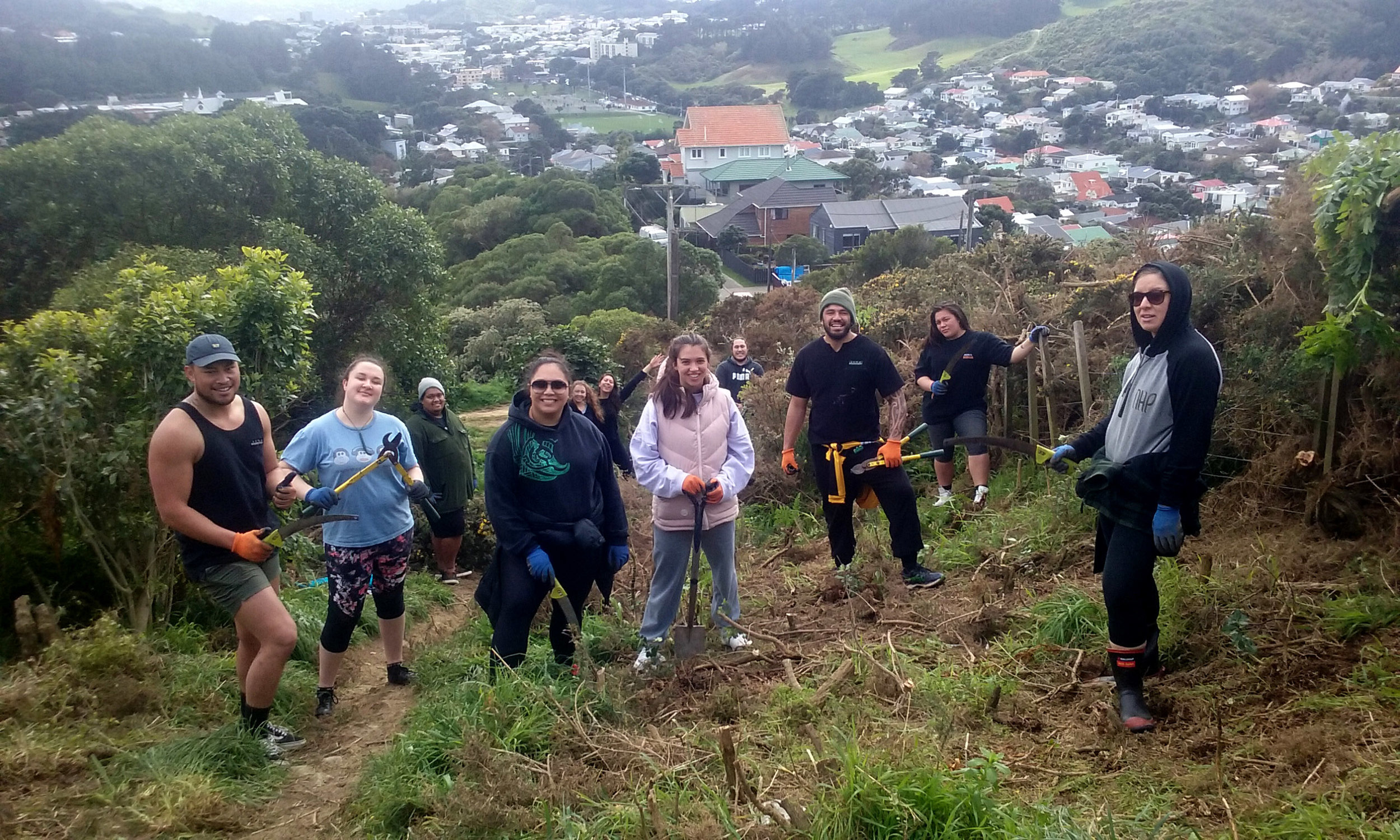
A Group Effort
We welcome any groups who want to help us out; it can be a great team-building exercise or just a way to contribute something practical to the project.
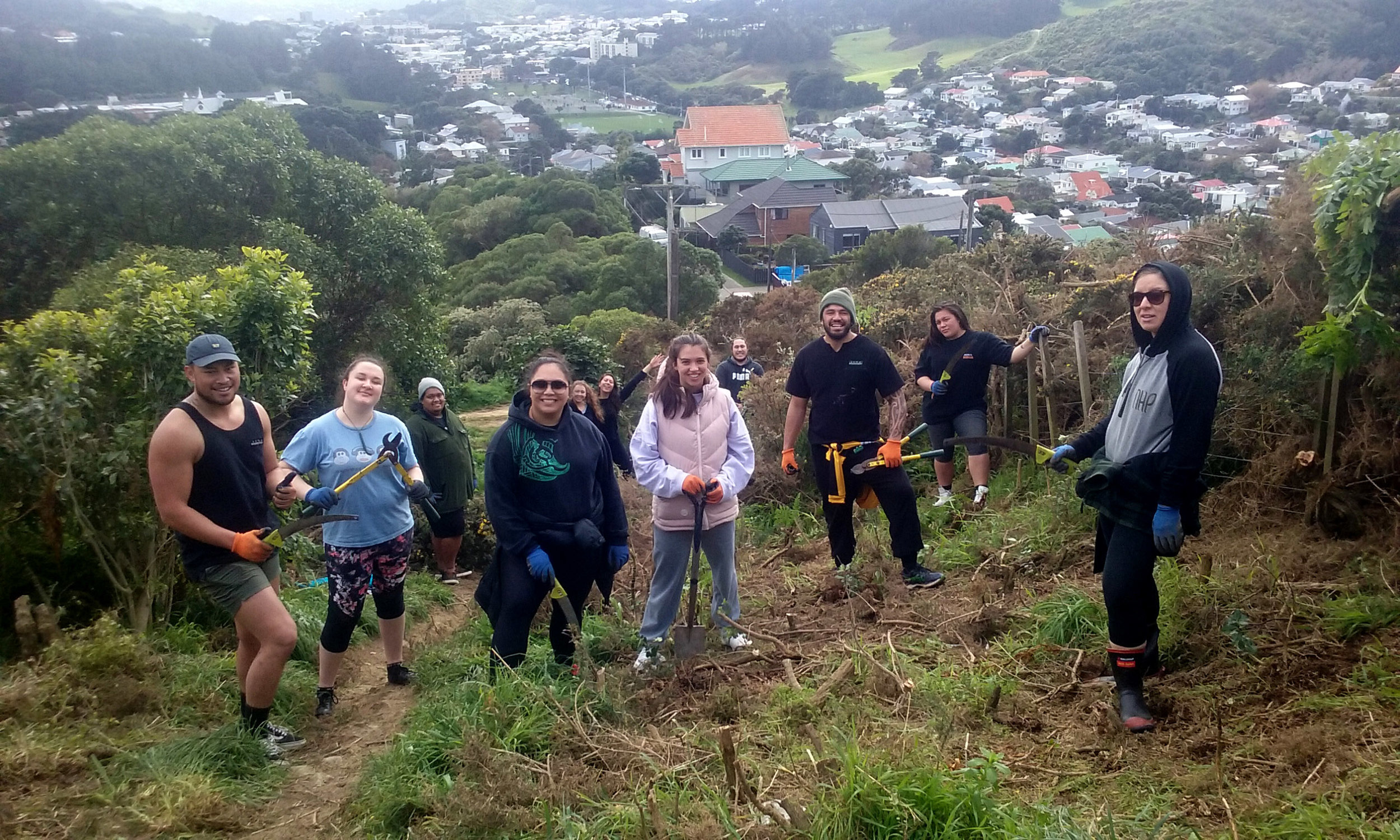
We have had several groups contact us this year offering to help at Manawa Karioi. The most recent group was Tuia te Here Tangata, who were staying at Tapu Te Ranga marae. In the space of one hour, the 15 or so volunteers had cleared a wide stretch of gorse from the track that connects Manawa Karioi to the top of Rhine St. This track has always been a bit of a problem to keep clear, and is earmarked for a major planting session or two next year.
Next, it was off to do some planting with the small amount of trees left over at the end of the planting season, including a couple of rata. These were put in at one of the viewpoints looking out over the valley below.
We welcome any groups who want to help us out; it can be a great team-building exercise or just a way to contribute something practical to the project. Groups of 5-10 are ideal, although we can cater for up to 15 at a time. From May-August most jobs involve planting, for the rest of the year it is mostly track maintenance work. Mostly we take groups on weekends, but with enough notice we can usually accomodate groups on week days. Contact us if you are keen!
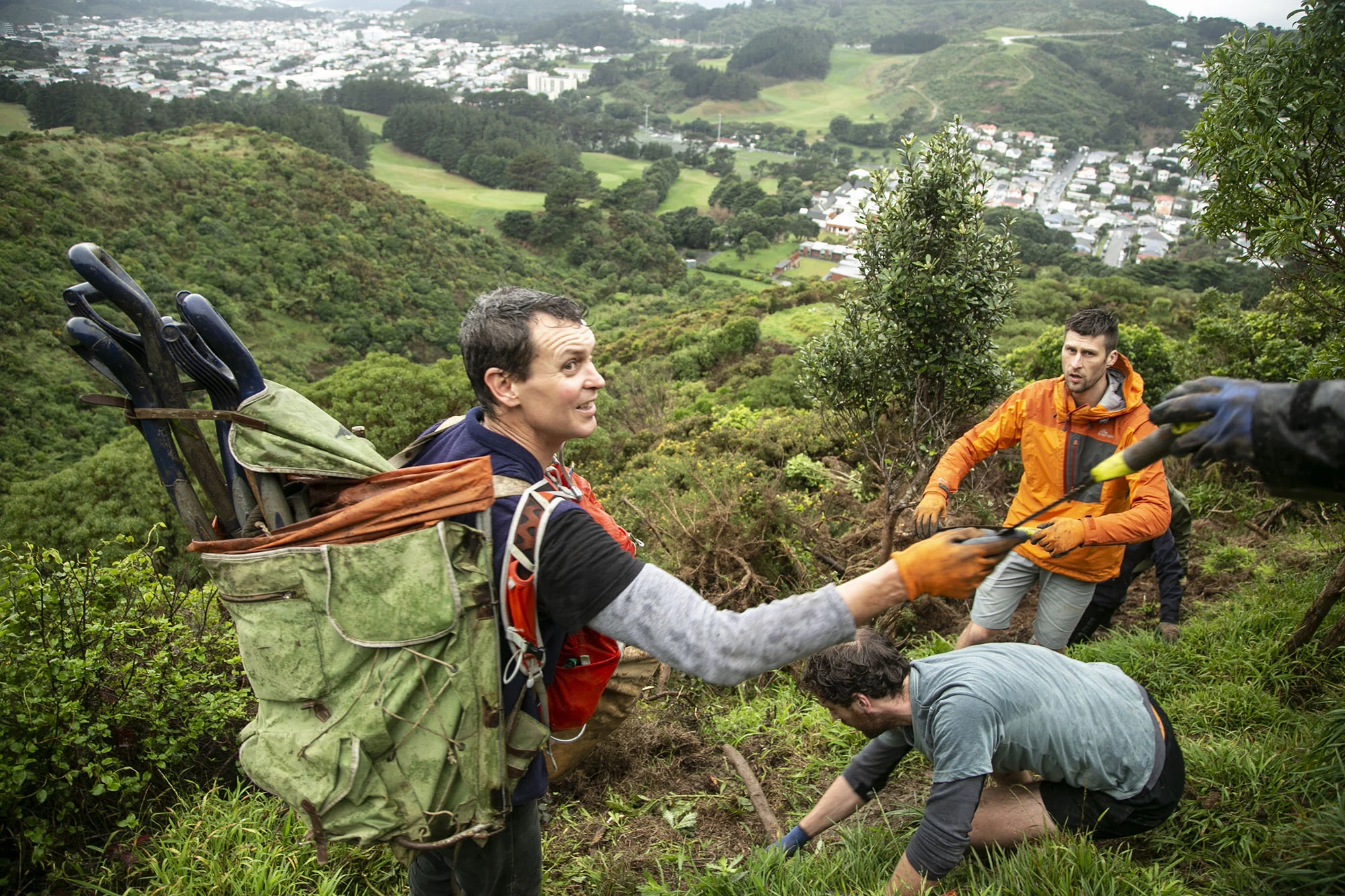
End of the Planting Season - Progress Report
Each year, we run our planting working bees each Sunday of May and August, planting is in winter to allow the plants to establish roots before the drier summer months arrive. This year, we used social media, a new website and emails to attract volunteers, and as a result we have been rewarded with lots of volunteers showing up to our working bees.
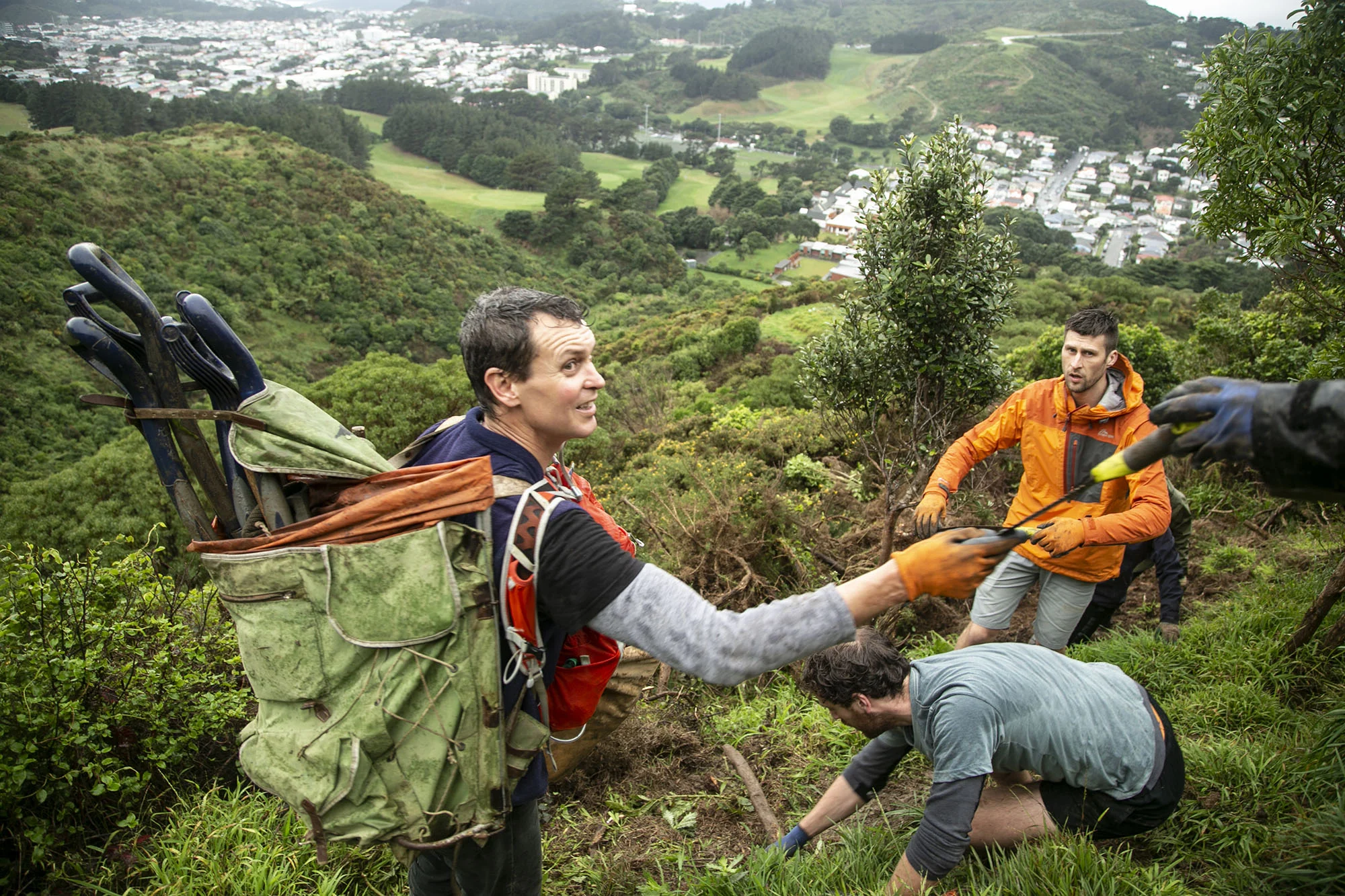
Each year, we run our planting working bees each Sunday afternoon of May and August, planting in winter allows the plants to establish roots before the drier summer months arrive. This year, we used social media, a new website and emails to attract volunteers, and as a result, we have been rewarded with lots of volunteers showing up to our working bees.
I asked Ross to write a progress report about the planting season for those that came along and helped get trees in the earth and maintain our tracks. The momentum created by the influx of keen volunteers has helped us achieve our goals and Ross said 'it is one of our most productive years!' Ness Patea
------------
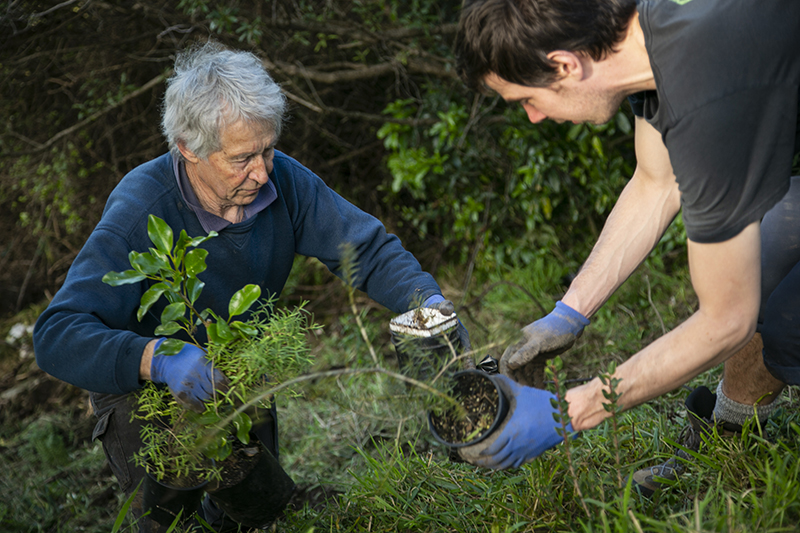
August 26 saw the last of our planting sessions for the year, and what a year it has been! We had pledged on the Trees That Count website that we would plant 1,000 trees. Not only did we get 1,200 plants in the ground, but we also increased our range of locally rare and unusual plants. We managed to plant 10 puawhananga (Clematis paniculata) in the main gully next to the Marae carpark. One single specimen of this native vine had been planted in Seed Source Gully, and it flowered for the first time this year.
We also put in another 20 Rewarewa, and on our last planting day we noticed that one planted about 10 years ago has started flowering. Of all the trees that will become one of the emergent species (meaning it will grow taller than the trees that make up the main forest canopy) it is one of the fastest growing. Its flowers provide nectar for birds such as tui and kaka, and it is a preferred nesting tree for kereru. Other emergent species we planted include matai, miro and totara, which all grow much slower than Rewarewa and take a lot longer to start producing fruit for birds.
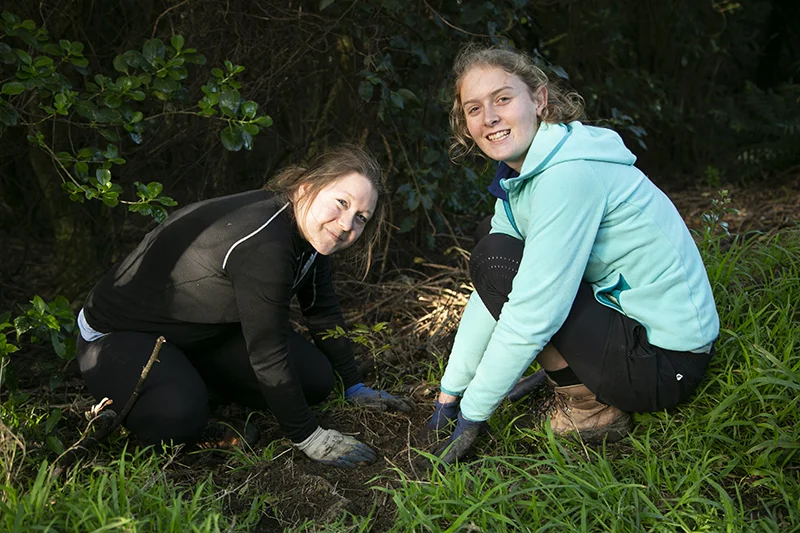
The Victoria University Tramping Club showed up for two tree planting working bees.
Once again we have been overwhelmed by the number of volunteers attending our working bees. Not only did we manage to get all the planting done during the winter, but we often finished planting early due to the number of helpers, and also got stuck into trimming vegetation back from track sides. Due to this our track network is constantly improving.
Now that planting has finished, it doesn't mean we are sitting back. We still have a lot of track work to do, with the most important project being the installation of map boards and track name signposts throughout our 5km network of tracks. This will be an ongoing process and may take us well into 2019. But at the end of it, we expect that visitors will find it a lot easier to navigate their way around.
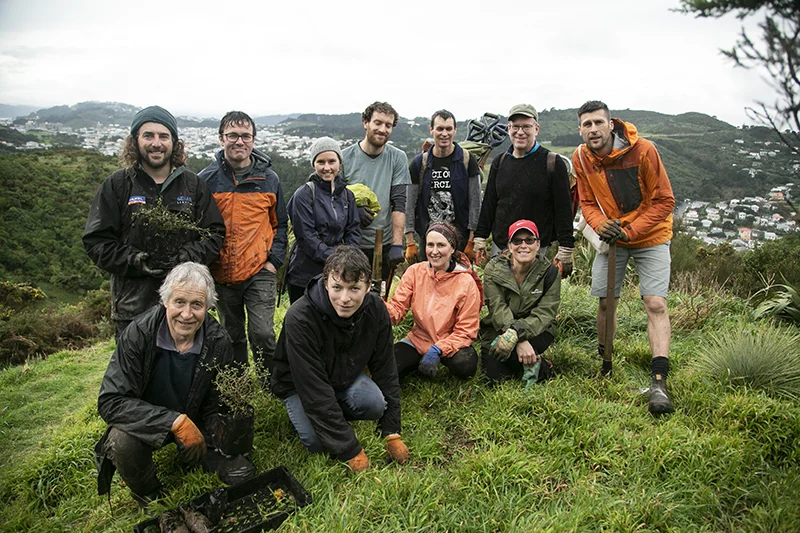
Another project we have on the cards within the next couple of months is to install several seats at viewpoints on the upper slopes.
None of this would have been possible without the help of all those who have volunteered their time. Nga Mihi Nui!
Ross Gardiner
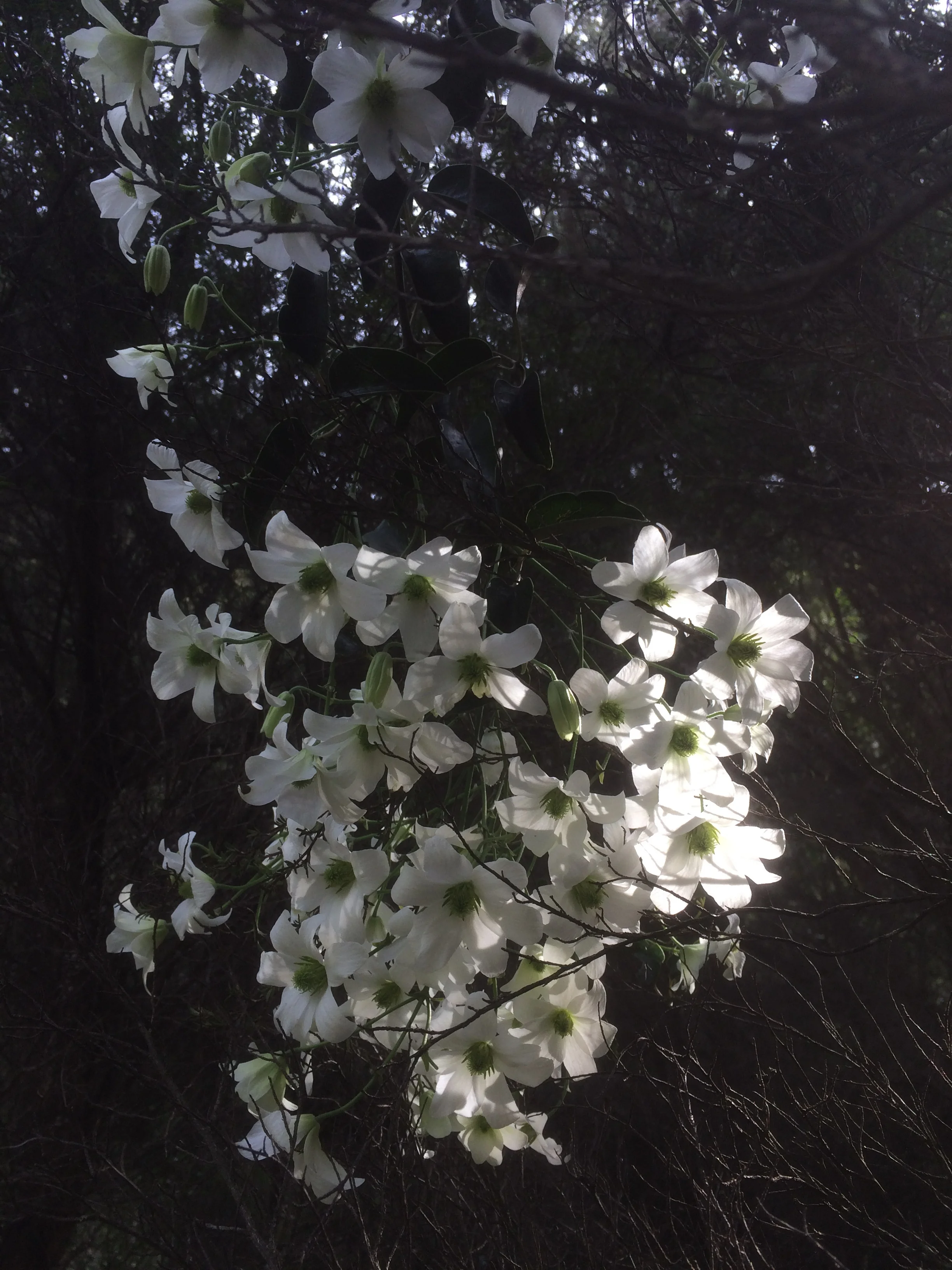
Clematis paniculata in Seed Source Gully
Clematis paniculata flowering in Seed Source Gully, not to be confused with introduced invasive Clematis vitalba (old man's beard).
This is possibly the first time this species has flowered at the Manawa Karioi site in 150 years.
Although occasionally present in gardens, this is a great step towards re-establishing this plant in the local area using locally sourced seed, thereby helping to protect the local gene pool of this species.
Planted 5 years ago, this is an example of our efforts to re-establish the broad range of plants that once existed in the area.
These are female flowers - the species is diecious (has separate male and female plants). So we will need to establish a few male plants nearby to pollinate it.
Peter Russell
Podcast: $5000 grant to create new signs
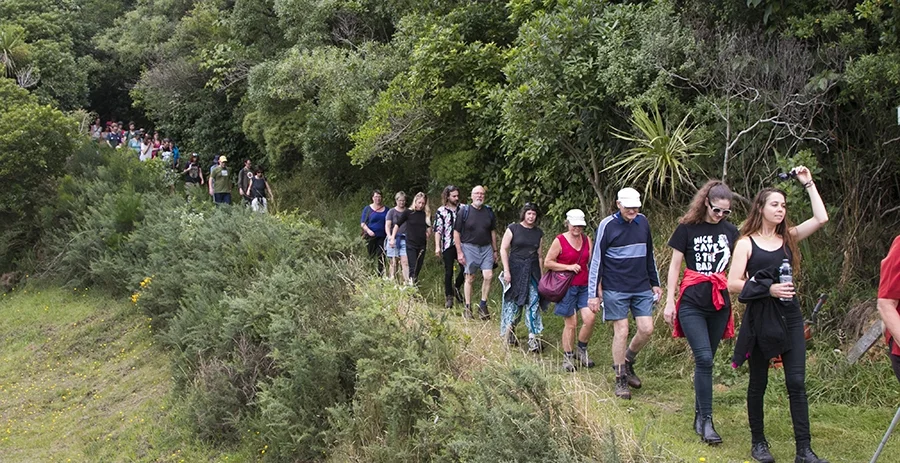
Island Bay’s Manawa Karioi Ecological Restoration Project has won a $5000 grant to erect signs and put in track markers that will help people walk local bush trails.
The money comes from the Walking Access Commission’s Enhanced Access Fund, which supports local groups to build and preserve outdoor access - especially tracks and trails.
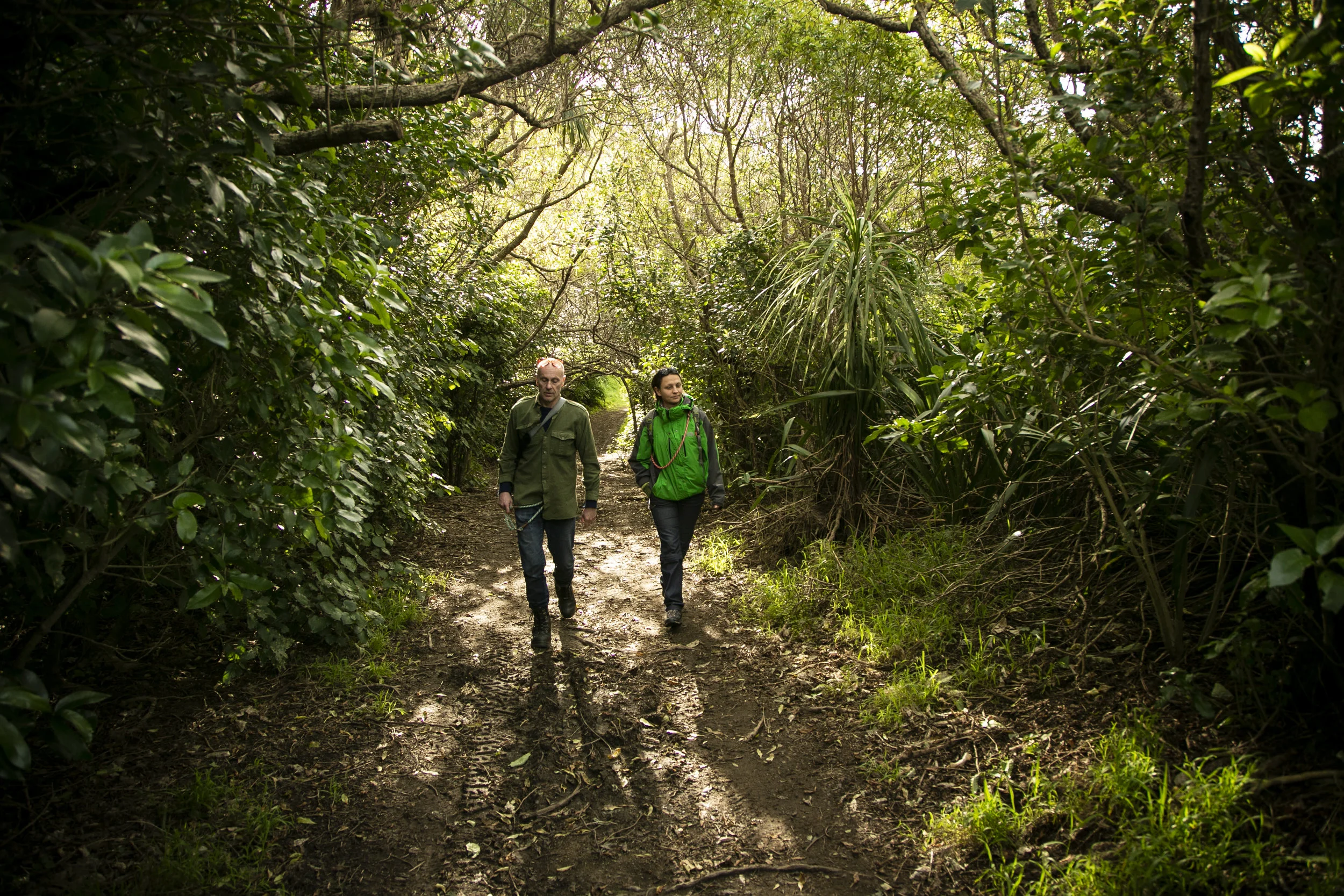
Walking Access went to Manawa Karioi to meet Chris Livesey from the restoration project. Chris says that currently the tracks, none of which are marked, can be a confusing web for people who have not used them before. New map panels at the entrances to Manawa Karioi and colour-coded track markers will help more people to enjoy them.
Listen to the podcast here.
Annual General Meeting 2018
Are you keen to help keep the wheels of the Manawa Karioi Ecological Restoration Project turning, or to learn more about the project?
If so, please:
come to the Annual General Meeting (AGM) of the Manawa Karioi Society at 1.30pm Sunday 23 September 2018 at Tapu Te Ranga Marae;
consider becoming a financial member of the Manawa Karioi Society (annual subscription $20; pay at the AGM or email papripaul13@gmail.com for internet banking details);
consider joining the Society's Committee to help shape the direction of the project and to help with its implementation.
renew your membership
The context for our project is given by the Society's rather unique objectives - see below. The last year has seen good progress with additional planting, weed control and track maintenance. During the next year we will also be putting effort into track signage so that our tracks are more accessible and user-friendly. The AGM is an opportunity to collect our thoughts, review our progress and make plans for the future.
Are you keen to help keep the wheels of the Manawa Karioi Ecological Restoration Project turning, or to learn more about the project?
If so, please:
- come to the Annual General Meeting (AGM) of the Manawa Karioi Society at 1.30pm Sunday 23 September 2018 at Tapu Te Ranga Marae;
- consider becoming a financial member of the Manawa Karioi Society (annual subscription $20; pay at the AGM or email papripaul13@gmail.com for internet banking details);
- consider joining the Society's Committee to help shape the direction of the project and to help with its implementation.
- renew your membership
The context for our project is given by the Society's rather unique objectives - see below. The last year has seen good progress with additional planting, weed control and track maintenance. During the next year we will also be putting effort into track signage so that our tracks are more accessible and user-friendly. The AGM is an opportunity to collect our thoughts, review our progress and make plans for the future.
Everyone is most welcome to the AGM - please register for this event either through our Facebook event or reply to this email if you are planning to attend so we are aware of numbers. Tea, coffee and snacks provided.
The objectives of the Manawa Karioi Society include:
- To restore a forest ecosystem to the land managed by the Society which is similar to that which existed there immediately before human arrival.
- To apply the principle of kaitiakitanga, or stewardship, in the care of the land.
- To establish a partnership of Maori and Pakeha in achieving the objects of the Society.
- To foster community involvement in the Society’s activities by encouraging individuals and groups to use the land for activities such as recreation, education, health improvement and cultural activities at the discretion of the Committee.
- To encourage in particular the involvement of children in the Society’s activities.
Manawa Karioi Ecological Restoration Project
Annual General Meeting 2018
23rd September 1.30pm - 3.00pm
Tapu te Ranga Marae - End of Danube Street, Island Bay