Weathering the Storm: Working bee plans
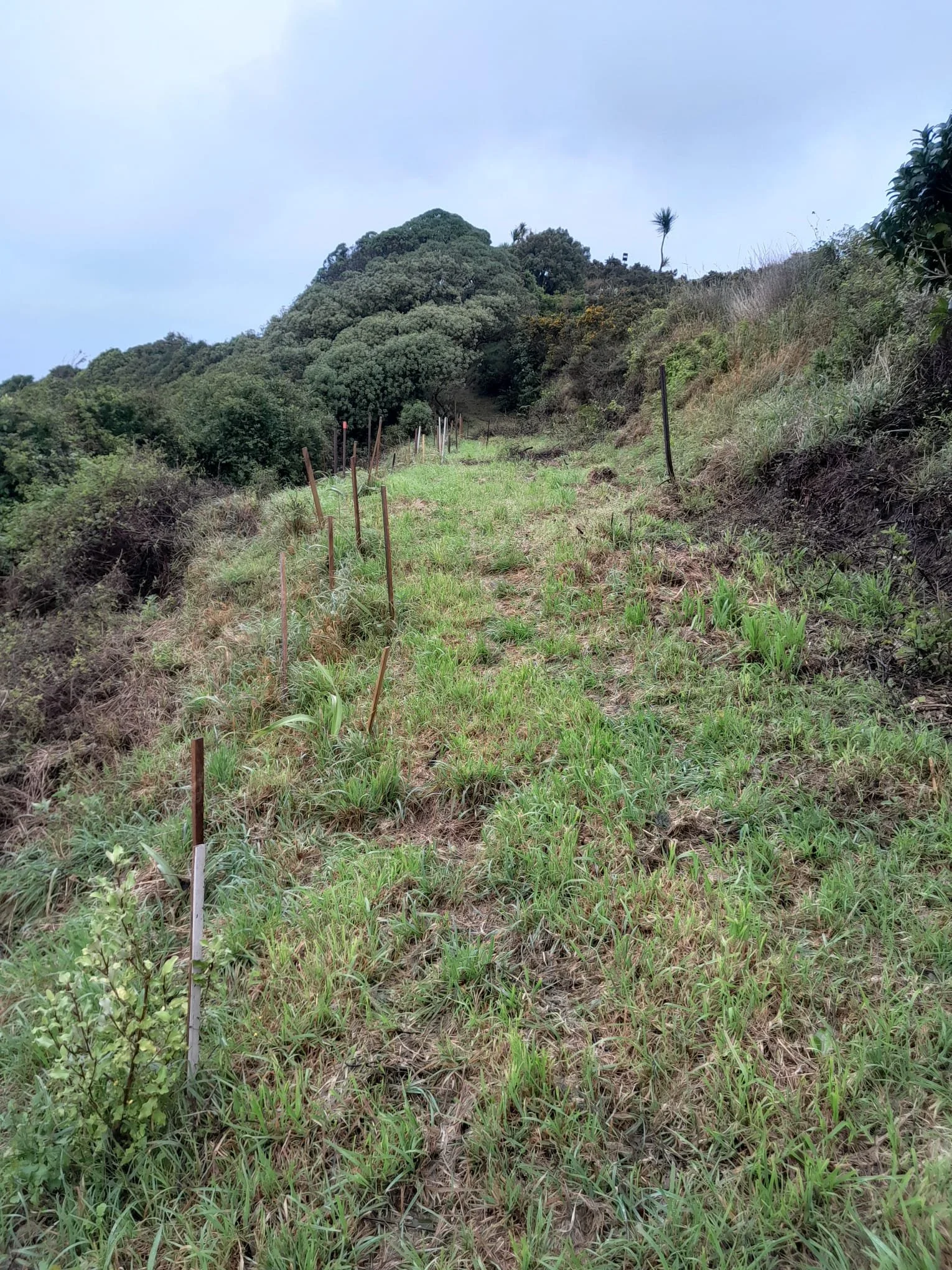
View along the new track/viewpoint near Quebec Street. The wooden stakes mark trial plantings of several plant species last year, with a 90% survival rate.
As planting season approaches, yet more extreme weather events have highlighted the importance of our plan to maximise plant species diversity. This has been discussed in a previous blog post "From Storm Damage to Strength - Building a Forest That Lasts" which talked of how plant biodiversity speeds up forest recovery after storm damage (and highlighting the 5-layers of plants in lowland podocarp-broadleaf forests).
The article "Sealing Up the Edges of the Forest" was about planting the right things on forest margins to avoid or minimise storm damage.
This year, we continue with forest margins planting as we work on new open areas. One of these areas is a short section of track with a great viewpoint linking the upper boundary of Manawa Karioi near Quebec St with the City to Sea Walkway. Near the top of the hill, this is an ideal spot for species that tolerate dry summers and strong wind.
Everything from locally common things like wharariki (mountain flax) to weird coprosmas (Comprosma areolata, C rhamnoides) and even a few kaikomako. A skink was seen at this spot whilst planting preparation work was being done, and many of the plant species we are putting in also provide ideal skink habitat. There are several known skink populations in neighboring Tawatawa Reserve.
The other open area we will be planting later in the season is where the pine trees were felled over a year ago. Some of this area is exposed and dry, whilst some is more sheltered and suitable for larger trees. This work will also see the bottom section of the track Te Whare Ahuru realigned to an easier gradient. This section of track has been inaccessible for several years due to erosion and then pine tree felling.
Besides these forest margin planting sessions, we will also be putting in dozens of kohekohe under established trees (they need shelter to survive the first few years) and similar amounts of titoki in semi-open areas. Both of these species will go on to form the future canopy (Layer 4 of the forest). And of course we will be planting more podocarps such as totara and matai, which along with rewarewa will become Layer 5 (emergent species)
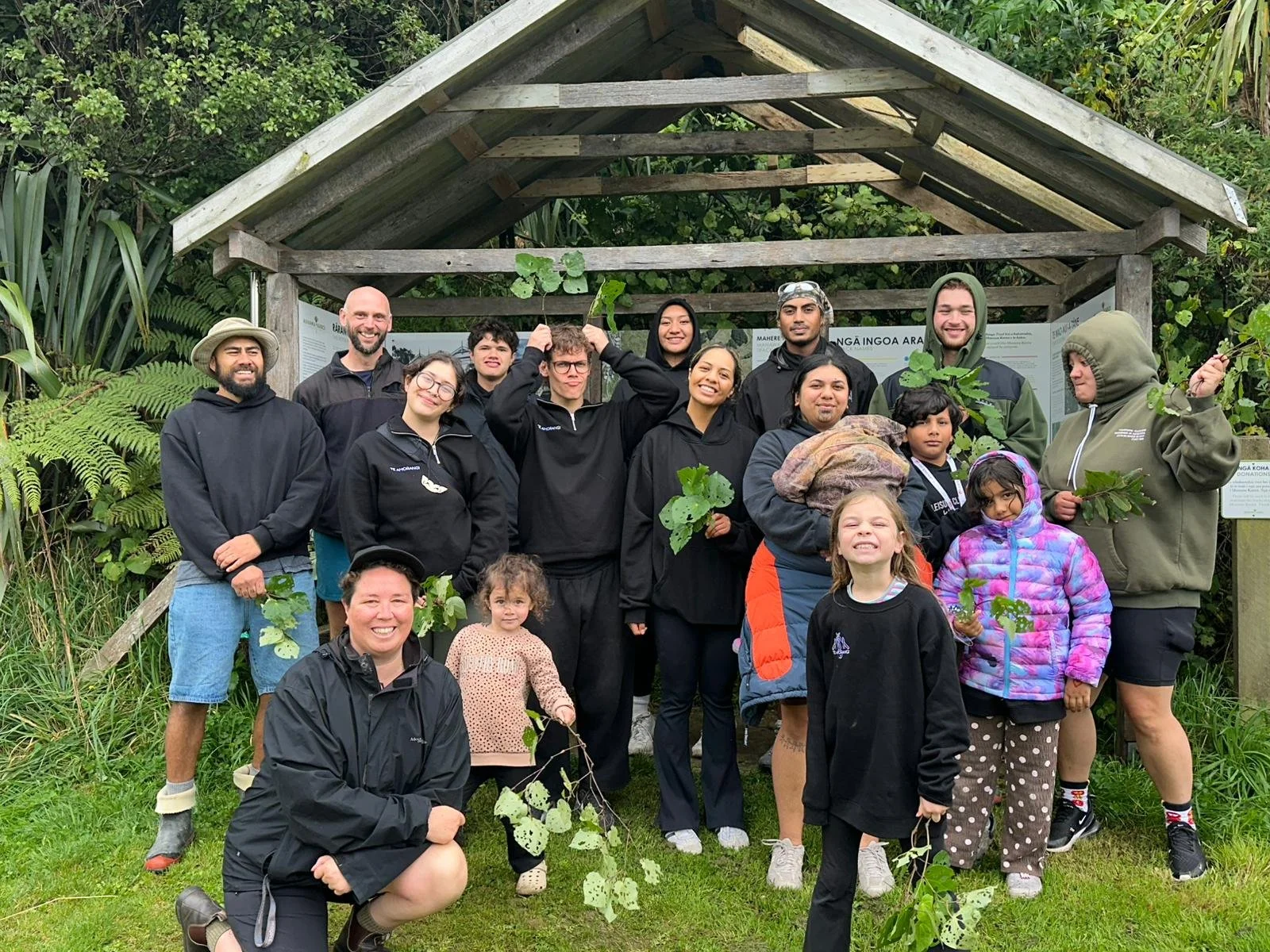
The wider whanau from Tapu te Ranga Marae learning about Rongoā Māori with Pare Sannyasi at Manawa Karioi.
Manawa Karioi Winter Working Bees
Join us to restore for our ngahere.
Every Sunday in June and August, 1pm–3pm
Meet at the Tapu Te Ranga Marae Carpark – end of Danube Street, Island Bay, Wellington
Rain or shine – we’ll be out there planting, maintaining tracks, and enjoying the ngahere.
Tools, gloves, and good vibes provided – bring suitable footwear, and a waterbottle.