We're Not Just Planting Trees, We're Planting a Forest
When it comes to ecological restoration, it's important to think long term, and to bear in mind the old maxim "Less haste, more speed".
Globally, many planting projects have focused on getting as many trees in the ground as quickly as possible. This is especially true of projects aiming for carbon sequestration. But lack of plant species diversity often means in decades to come, the forest can collapse as trees get hit by disease, pests, or simply die of old age.
There is no chance of that happening at Manawa Karioi. Right from the beginning, understory species (eg karamu, wharangi) were planted amongst the bigger pioneer species such as kohuhu. Forest giants like totara were also planted, and after low canopy was established, kahikatea and nikau were put in.
We spent the early 2000s trialling a wider range of species that we had previously thought might need shelter, and here's what we've learned...
Totara - can handle full exposure to sun and wind. It doesn't like much shade, which slows growth considerably.
Rimu - doesn't like full sun, but will die in heavy shade. We plant it where it gets some protection from the summer sun, but has to be a few metres away from fast growing taller trees.
Rata - hates heavy shade, but often dies in full sun, especially if the soil around it gets hot. We plant it with a cardboard plant protector around it, which has lead to almost 100% survival rate.
Titoki - needs light shade. We often plant it in an open area a few metres south of taller trees. This provides midday shade in summer. In more open areas, a cardboard plant protector is used.
Rewarewa - is often among the first species to establish when cleared land is left to regenerate. A good example of this is the former farmland on the hills around Otari. As it grows tall, and quickly, it provides an ideal perching tree for birds like kaka.
Kohekohe - this is often the main canopy tree in coastal forests up to 5km inland throughout Te Ika A Maui. We have been surprised to find that it can survive in open areas so long as it doesn't get hit by frost and that the soil doesn't get too dry in summer. It can survive dry areas so long as it has shade in summer.
Our trials parallel the results found in a study of revegetation projects around Tamaki Makarau.
So why is it important to try to get future canopy and emergent species established early on? To put it simply, a forest is more likely to survive and regenerate itself if it has enough of the key species right from the beginning. This natural regeneration will allow the forest to bounce back from storms and landslips. We've covered this in previous articles.
It's important to note that 98% of forest cover south of the Porirua-Johnsonville line was removed during the late 1800s to make way for farmland. This means that for many key species, there are few seed sources left. South of the CBD, we are aware of only 1 old kohekohe in Tawatawa Reserve, and 4-5 in Miramar. And there's no kahikatea at all!
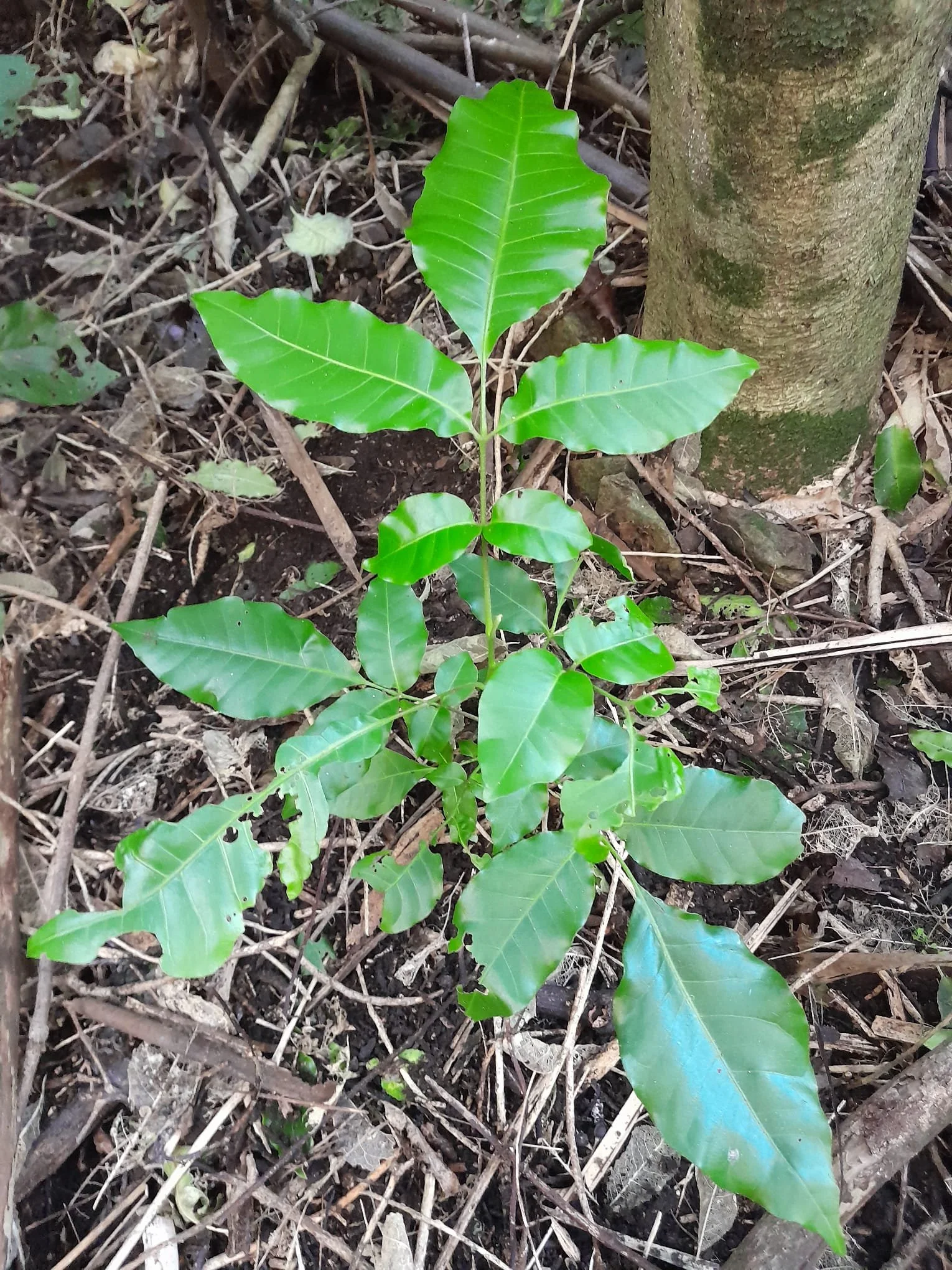
We aren't aiming to plant out the forest exactly as we hope it to be. We're simply making sure we plant sufficient quantities of as many species as we can, so that nature can do the rest for us. We're really starting to see that happen now. Not only are common species like ngaio spreading, but also locally rare species. We've seen ewekuri and poporokaiwhiri popping up around the Nature Trail for years. This year we found the first self-sown kohekohe sapling near the Nature Trail seats.
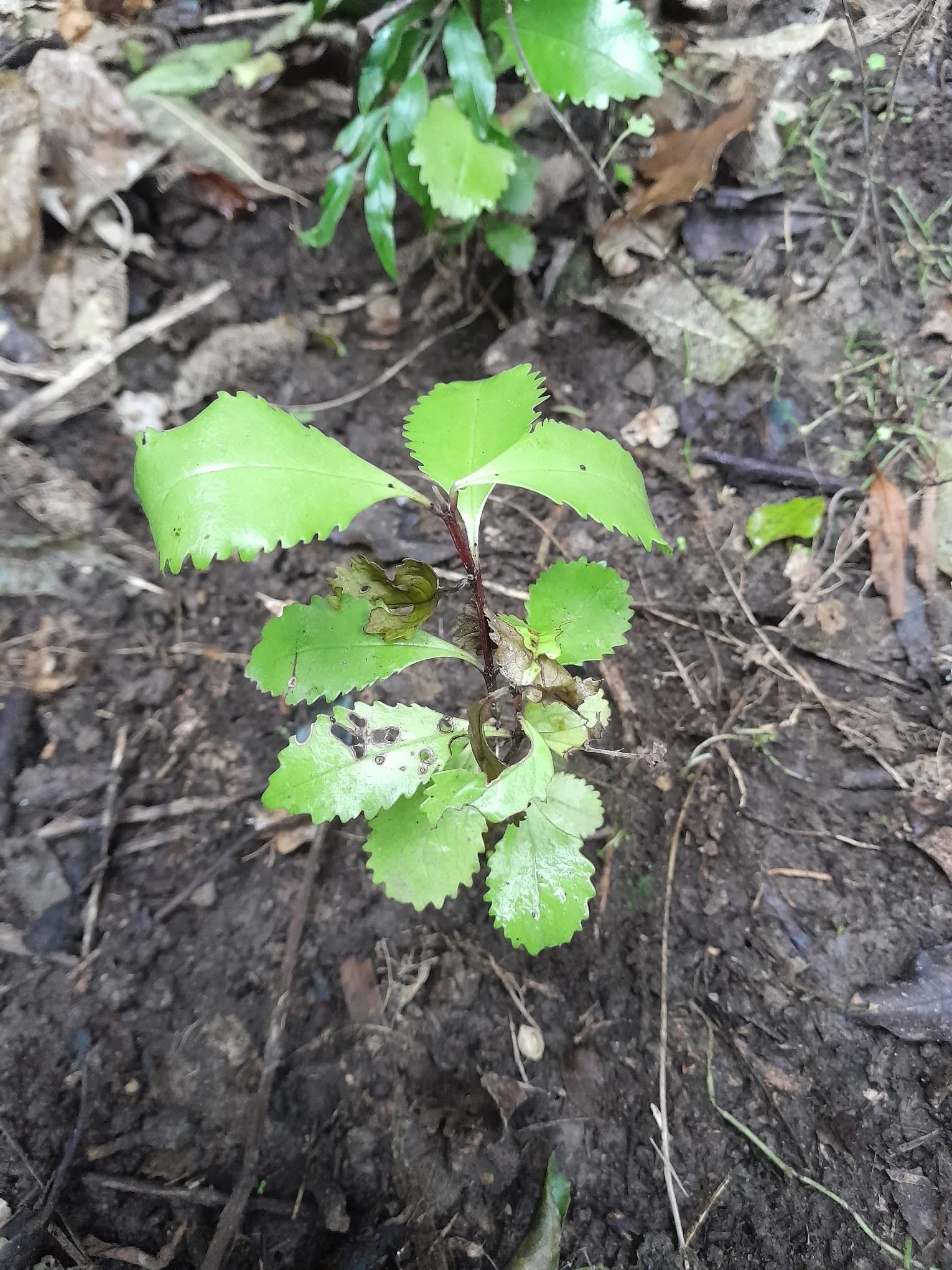
And nearby, we found 3 pukatea seedlings.
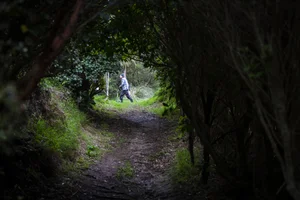
The increased trapping done by the Predator Free Island Bay group has meant there are significantly fewer rats and mice eating forest seeds. This has accelerated natural regeneration, clearly seen in the photo below. This was taken a year after the pine trees above the Nature Trail were felled.
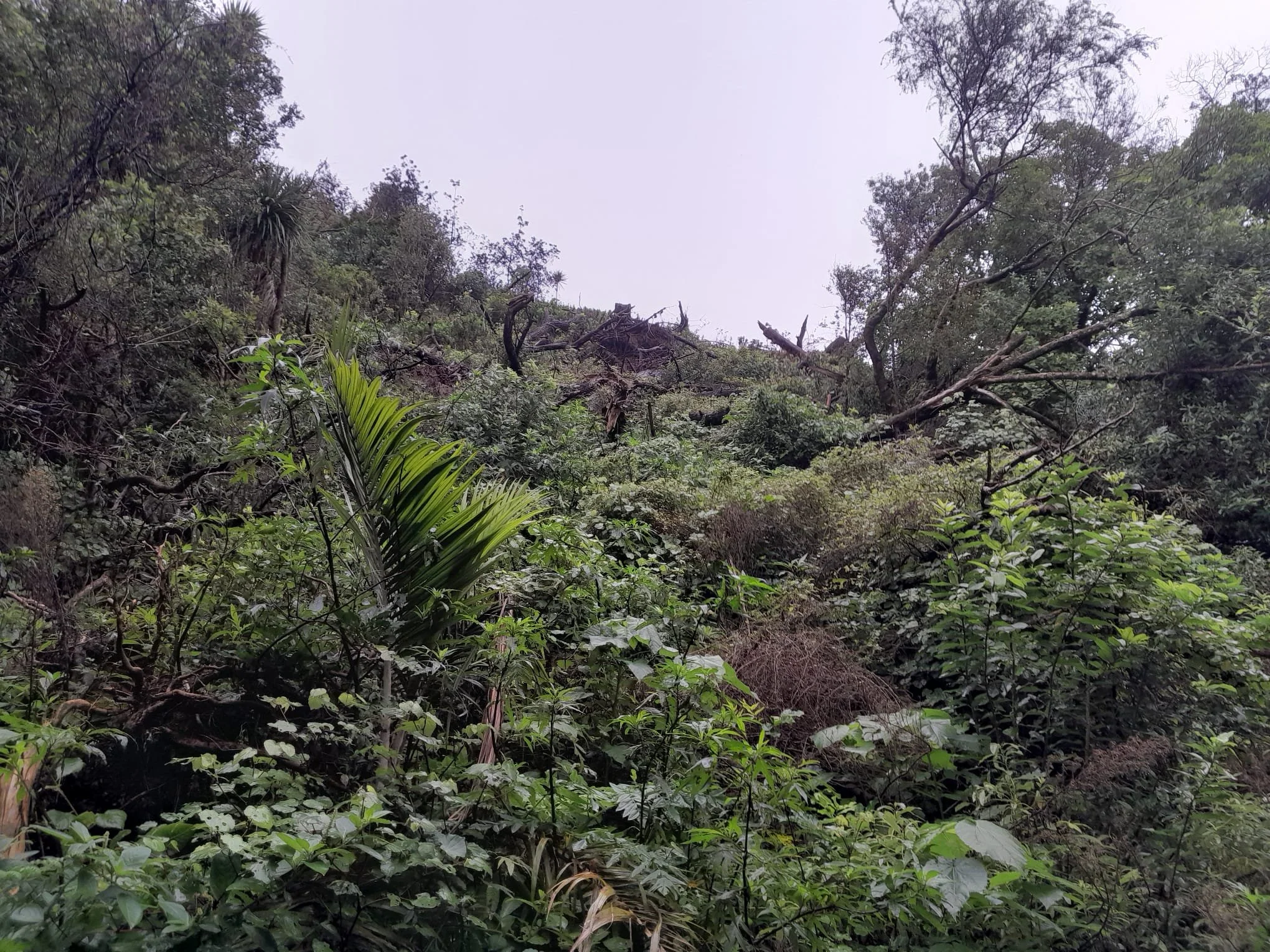
We have 5 planting sessions this August. Amongst the usual suspects of plants, we will also be putting in a mix of over 100 emergent and future canopy trees, including titoki, totara, rewarewa, matai, rimu, rata and kohekohe.
We will also be doing some track work, principally realigning the lower section of Te Whare Ahuru now that the last of the felled pine trees have been cleared out of the way.